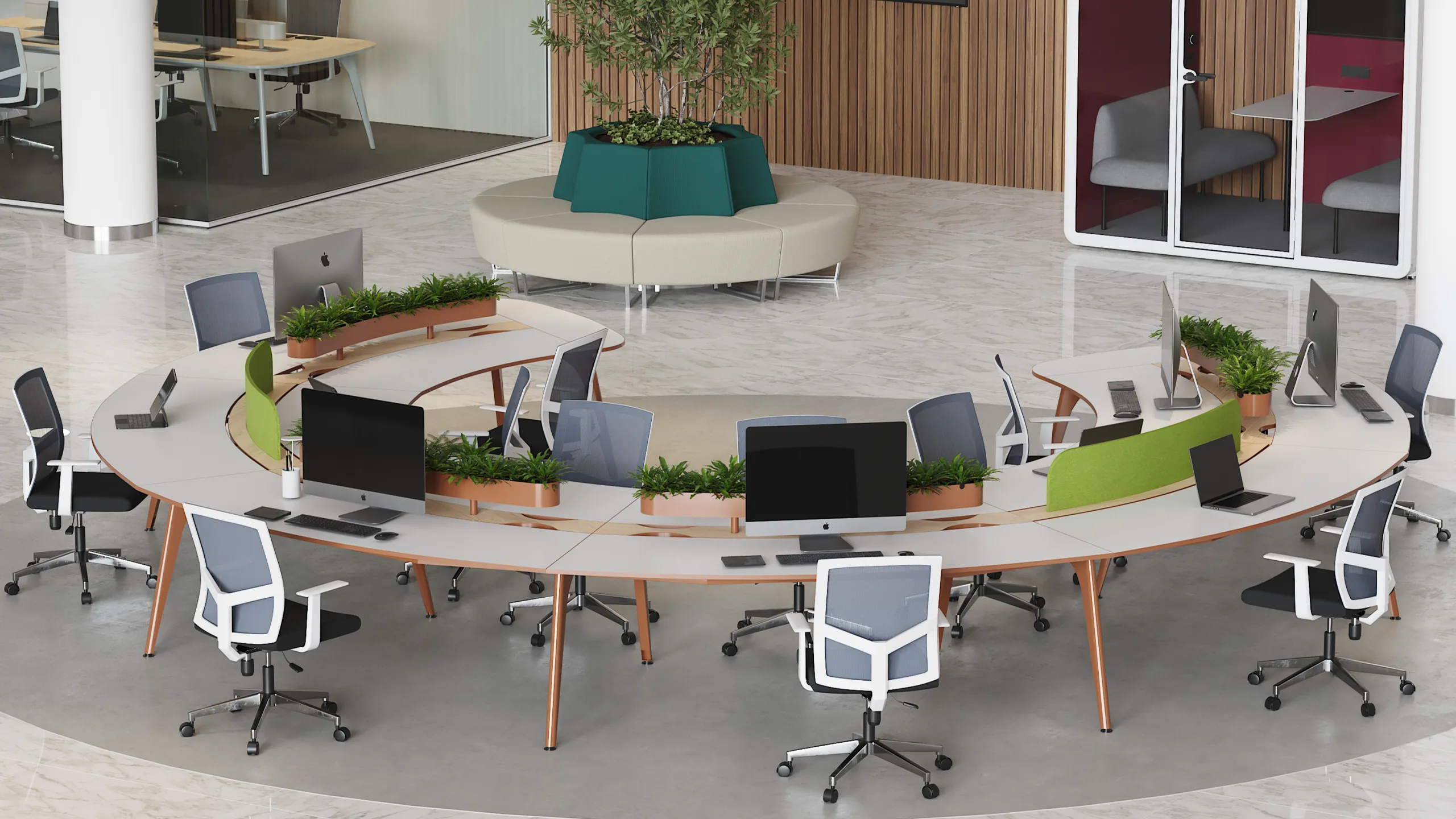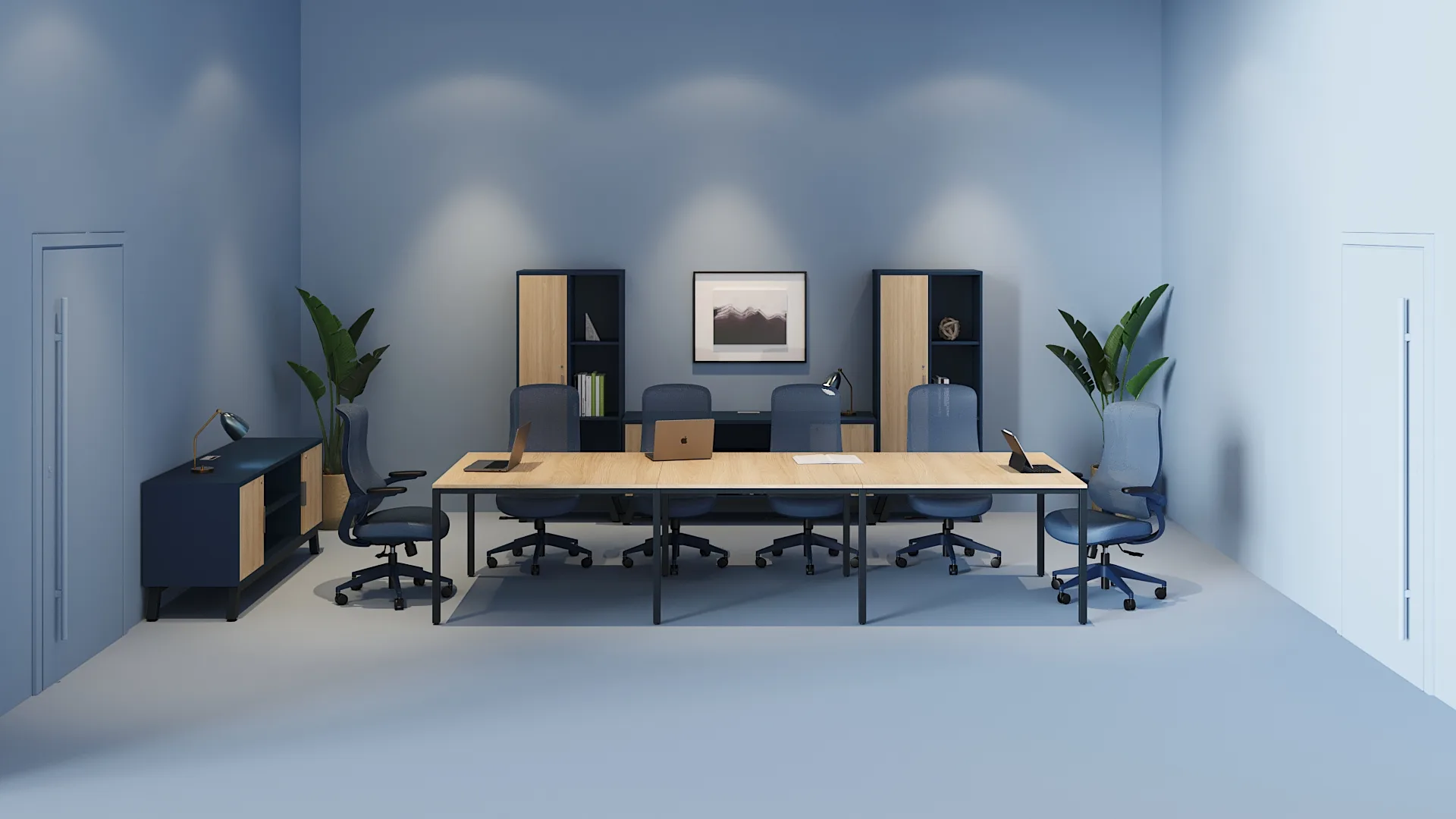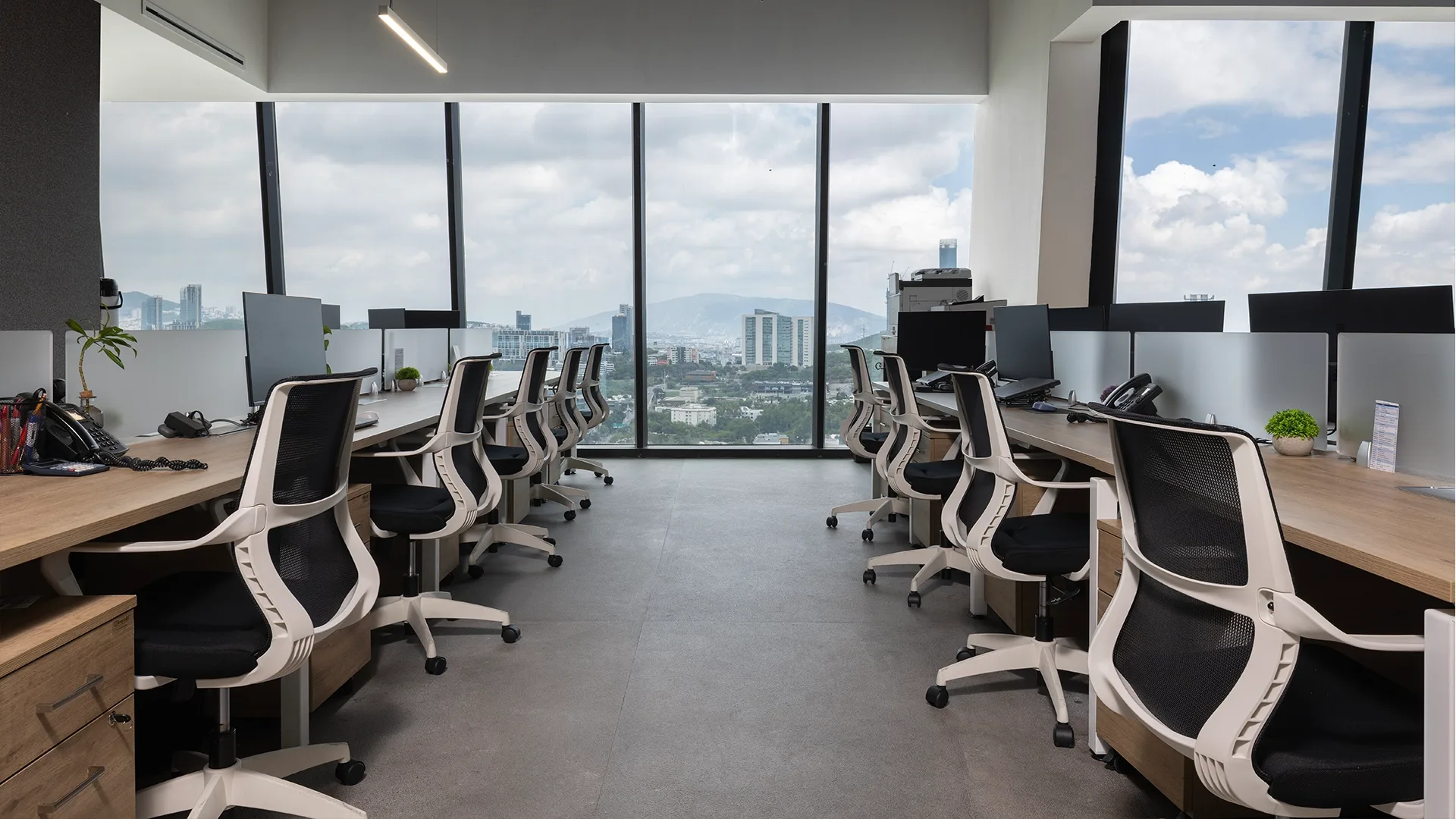





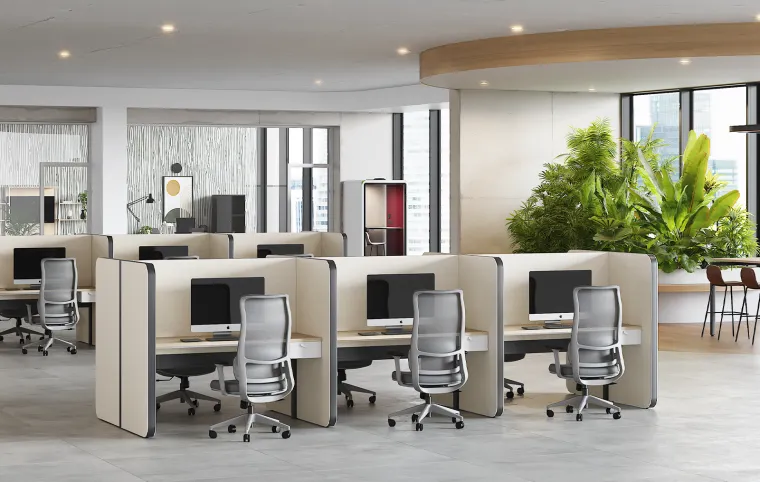









Outfitting ten people with chairs is a simple decision: try a few models, pick the most comfortable one, done. Outfitting two hundred is a project. You have to account for a range of body types, long workdays, rotating users, volume budgets, maintenance, and a consistent look across the entire floor. A specification mistake doesn't affect one person. It affects an entire floor.
Task chairs are the foundation of seating in administrative areas, call centers, customer service teams, sales teams, and operations departments. In this article, we explain what they are, what features they should have when purchased for large teams, how to evaluate suppliers, and which mistakes to avoid so your investment pays off for years.
What Is a Task Chair?
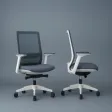
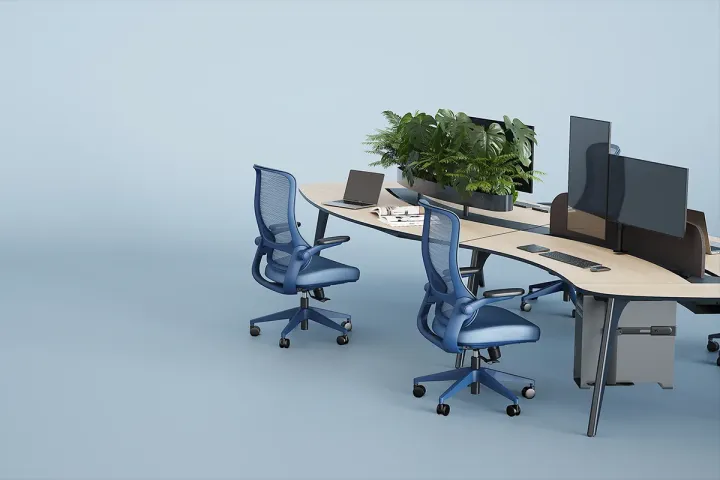
A task chair is the everyday work chair for administrative and customer service positions. It differs from an executive chair in that it prioritizes functionality, ergonomic adjustments, durability, and value over visual status. It typically offers an adjustable seat and backrest, a swivel base with casters, and, depending on the model, armrests, lumbar support, and recline mechanisms.
For large teams, its value lies in combining three things that are hard to get together: sustained comfort, resistance to heavy use, and a price that makes outfitting large volumes feasible.

Why Seating for Large Teams Requires a Different Approach
1. Diverse users
In a large team, people of different heights, builds, and postural needs work side by side. A model with limited adjustments will leave part of the team uncomfortable.
2. Heavy, prolonged use
In areas like customer service or operations, chairs are occupied all day, sometimes across multiple shifts. Wear accelerates, and low-quality mechanisms fail early.
3. Rotation and shared workstations
When several people use the same chair, the adjustments must be intuitive and quick to change in seconds.
4. Impact on health and absenteeism
Back, neck, and shoulder discomfort turns into fatigue, reduced focus, and missed days. With many people, the cumulative effect is significant.
5. A consistent look
A floor full of mismatched chairs looks improvised. A uniform model signals order and planning.
6. Logistics and maintenance
Purchasing, delivering, assembling, and servicing hundreds of chairs requires a supplier with manufacturing, installation, and replacement-parts capabilities.
Features a Task Chair Should Have for Large Teams
Essential ergonomic adjustments
- Seat height with a quality pneumatic lever.
- Seat depth, to fit different thigh lengths.
- Lumbar support that is adjustable, or a backrest with an ergonomic curve.
- Adjustable armrests, at least in height and ideally in width and angle.
- Recline mechanism with locking and tension adjustment.
To dig deeper into this topic, check out our article on office chairs with multi-directional adjustment.
Materials based on use
- Mesh: ventilation and even support, ideal for long workdays and warm climates.
- Technical fabric upholstery: more warmth and a wider range of colors, with stain and wear resistance.
- High-density foam: keeps its support over time and prevents sagging.
If you're torn between materials, see our comparison of upholstered chairs vs. mesh chairs.
Durability of mechanisms and base
Certified pneumatic cylinder, a robust mechanism, a five-point base in reinforced nylon or metal, and casters suited to your flooring type. These are the components that fail most often and the ones most worth inspecting.
Ease of cleaning and maintenance
Materials that clean quickly, replaceable parts, and available spare parts lower the total cost of ownership.
Weight capacity
Check the maximum supported weight and make sure the design accounts for users of different builds.
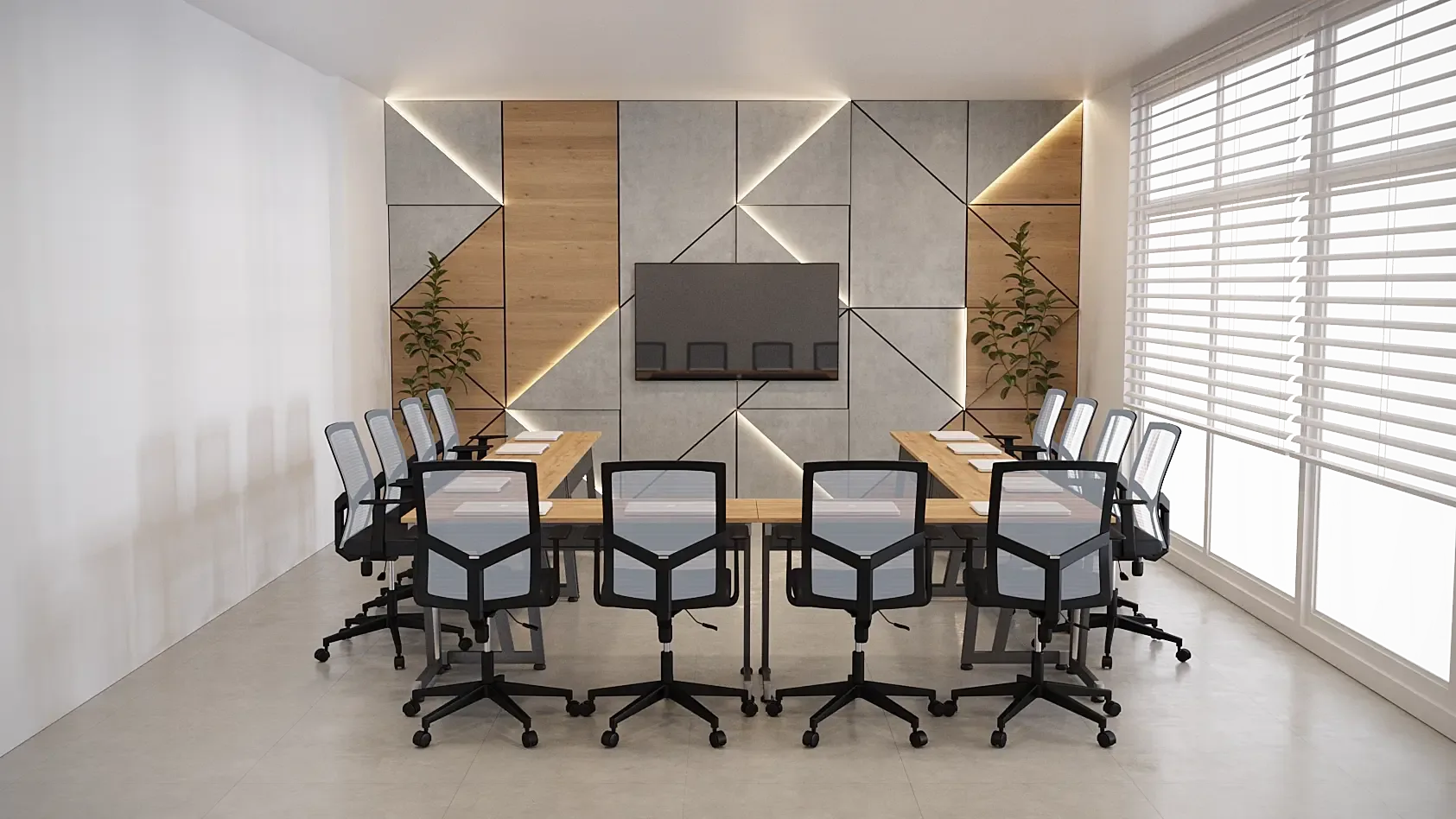
Understated, modular look
Neutral colors and clean lines make it easier to coordinate with desks, panels, and storage.
Explore the options available in our office chairs section.
Which Adjustments to Prioritize by Type of Area
- Call centers and customer service: ventilation, intuitive adjustments, good lumbar support, and durability across multiple shifts.
- Administration and operations: sustained support, adjustable armrests, and a comfortable seat.
- Sales and commercial teams: freedom of movement, good mobility, and recline for phone calls.
- Creative and development areas: stability, arm support, and comfort for long screen sessions.
- Coworking spaces and shared workstations: simple, visible, quick-to-use adjustments.
How to Evaluate Chairs Before Buying in Volume
- Define the usage profile: daily hours, shifts, rotation, and type of task.
- Test with real users: include people of different heights and builds.
- Request samples and run a pilot: one or two weeks of real use reveal what a brief trial can't.
- Review spec sheets: materials, weight capacity, certifications, and mechanism specifications.
- Ask about the warranty: coverage, duration, and which components are included.
- Verify spare parts availability: cylinders, casters, and armrests should be replaceable.
- Confirm delivery and installation capacity: timelines, assembly, and logistics for large volumes.
- Compare by total cost, not unit price: factor in lifespan, maintenance, and replacement.
How to Calculate the Real Cost of a Task Chair
A practical way to decide better is to divide the price by the expected years of use and add the cost of maintenance. A budget chair that loosens up after two years can end up costing more than a better-built model that lasts eight or ten. In large teams, that difference is multiplied by every workstation.
Training: The Adjustment Almost Nobody Makes
Many ergonomic chairs are used incorrectly because nobody explains how to adjust them. A short orientation session, with a visual guide in each area, helps the team take advantage of the adjustments and reduce discomfort. It's a low-cost action with a high return.
The Chair Within the Work System
A good chair performs better when the rest of the workstation supports it:
- Desks or workstations at the right height with clear legroom. Check out our workstations and desks.
- Modular systems for large teams, like the ones we describe in our article on modular desks for large teams.
- Acoustic control and privacy, with suitable panels. See our acoustic solutions for offices and our guide to panels for modern open-plan offices.
- Nearby storage to keep things organized. Explore our storage.
- Whole-body posture: to understand how chair, desk, and monitor work together, read our guide to chairs that improve posture while you work.
Common Mistakes When Outfitting Large Teams with Task Chairs
- Deciding on unit price alone. The upfront savings can turn into constant replacements.
- Not testing with real users. A chair that's comfortable for one person may not be for another.
- Ignoring the physical diversity of the team. One size and few adjustments leave many people out.
- Overlooking armrests. Fixed armrests create tension in the shoulders and neck.
- Not verifying spare parts and warranty. Without backup, a failure becomes a logistics problem.
- Mixing models without criteria. A mismatched floor looks improvised and complicates maintenance.
- Not training the team. Unused adjustments are wasted money.
- Neglecting the floor type. Unsuitable casters damage the floor and make movement difficult.
- Forgetting the climate of the space. In warm or high-occupancy areas, a closed backrest can be uncomfortable.
- Not coordinating with the rest of the furniture. The chair should work with desks, panels, and storage.
Best Practices for a Volume Seating Project
- Plan in phases if the team is growing, keeping the same model to ensure uniformity.
- Document sizes and settings for each area to make future replacements easier.
- Set up a preventive maintenance program: inspect mechanisms, casters, and hardware.
- Keep a small stock of spare parts.
- Gather team feedback after the first few weeks to catch any needed adjustments.
- Involve HR and Facilities from the start: they know the real needs and the discomfort reports.
How Línea Italia Can Help
At Línea Italia, we design, manufacture, and install corporate furniture for projects of every size. We understand how your team works, analyze the space, and propose seating coordinated with desks, panels, and storage in one cohesive solution, with 3D visualization, manufacturing, installation, and delivery. For large teams, support with specification and logistics makes all the difference.
Learn about our process in space design, explore our corporate furniture collections, and see real cases in our projects section.
Conclusion
Task chairs for large teams are a decision about health, productivity, and image, multiplied by every workstation. Real ergonomic adjustments, suitable materials, durable mechanisms, easy maintenance, and a supplier with delivery capacity are the criteria that separate a good investment from a recurring problem. Testing with users, evaluating total cost, and training the team complete the equation.
Outfitting a large team? Request a proposal from our team of specialists and find the ideal task seating for your project.