Contracts, employee files, tax records, client data, commercial proposals: every company generates and safeguards documentation whose loss, damage, or leak would have real consequences. Even in the age of digitalization, paper remains part of the day-to-day in areas like Human Resources, Legal, Accounting, and Executive Management, and it requires physical protection that matches its importance.
That is where heavy-duty steel filing cabinets become a strategic investment. They are not just a piece of furniture for storing papers, but a storage system designed to withstand heavy use, control access, and keep information in good condition for years.
In this article, we explain what sets a heavy-duty steel filing cabinet apart from a conventional one, which security features you should require, how to choose the right model for each department, and which mistakes to avoid when specifying one.
What Is a Heavy-Duty Steel Filing Cabinet?
A heavy-duty steel filing cabinet is a storage unit built with sufficiently heavy-gauge sheet steel and structural reinforcements that allow it to support more weight, resist impacts and deformation, and offer a higher level of security against unauthorized access.
Unlike a basic filing cabinet, which can flex under load, misalign its drawers, or have its locks give out with use, a reinforced model maintains its shape and function over time, even with heavy documentation and constant opening.
Why Choose Steel for Document Storage?
1. Structural Strength
Steel supports the accumulated weight of files, hanging folders, and archive boxes without deforming, something that lower-density materials don't always manage over the long term.
2. Durability Under Heavy Use
In areas where drawers are opened and closed dozens of times a day, the steel structure and reinforced slides keep operation smooth and stable for years.
3. Greater Perceived and Actual Security
A rigid steel body with a quality lock is harder to break into than furniture made from lightweight materials, and it conveys an image of document control to your team and to auditors.
4. Better Protection Against Environmental Factors
Steel with the right finish better resists moisture, dust, and pests that affect certain other materials, which helps keep documents in good condition for extended periods.
5. Easy Cleaning and Maintenance
Steel surfaces with powder-coat finishes clean easily and keep their appearance even with constant use.
Security Features It Should Include
Steel Structure with the Right Gauge
The thickness of the sheet steel and the internal reinforcements determine how much load the cabinet can bear and how well it resists forced entry. Ask the manufacturer for information on gauge and load capacity per drawer.
Reliable Locking System
There are several options:
- Individual lock per drawer, to control access by document category.
- Central locking (bar-style or master key), which secures all drawers with a single action.
- High-security key locks or combination locks, for more confidential documentation.
The right choice depends on the level of control each department requires and your internal information-handling protocol.
Anti-Tip System
Multi-drawer filing cabinets can become unstable if two drawers are opened at the same time under heavy load. An interlock system that prevents more than one drawer from opening at once protects both the cabinet and the people using it.
Reinforced Extension Slides
Good-quality telescoping slides let drawers open smoothly, support a full load, and prevent jams that, over time, damage documents and mechanisms.
Dividers and Internal Organization
Heavy-duty filing cabinets can include dividers, hanging folders, and compartments that make it easier to sort and track files. If you'd like to dig deeper into this topic, check out our article on filing cabinets with internal dividers for sensitive documents.
Durable Finishes
Powder-coat finishes resist scratches and corrosion, and let you choose colors that blend with the rest of your furniture. Explore the available options in our finishes section.
Types of Steel Filing Cabinets for the Office
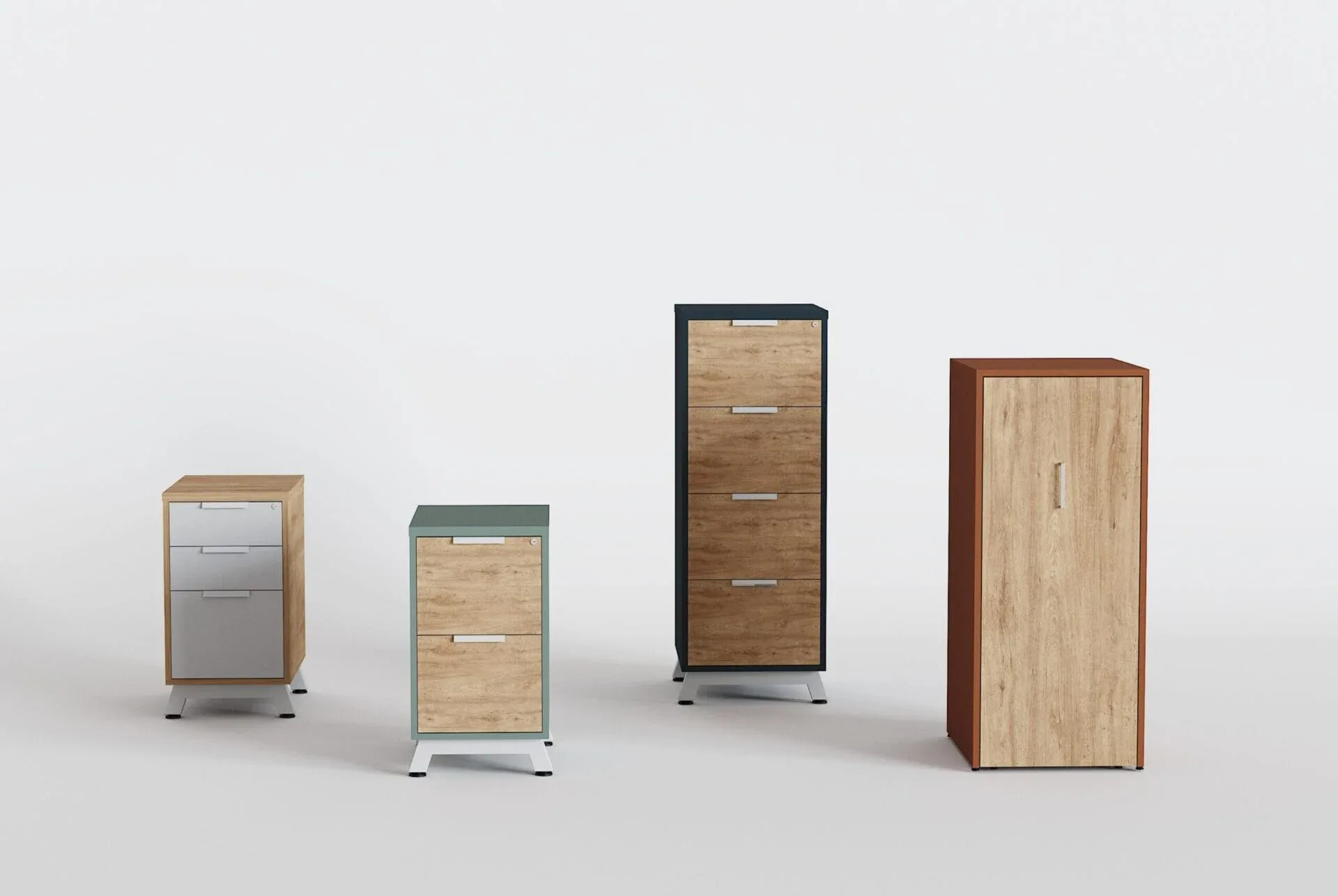
- Vertical filing cabinets with 2, 3, or 4 drawers: the most common configuration for frequently accessed files.
- Lateral filing cabinets: drawers that open along the wide side and allow side-to-side filing, making better use of space in hallways or compact areas.
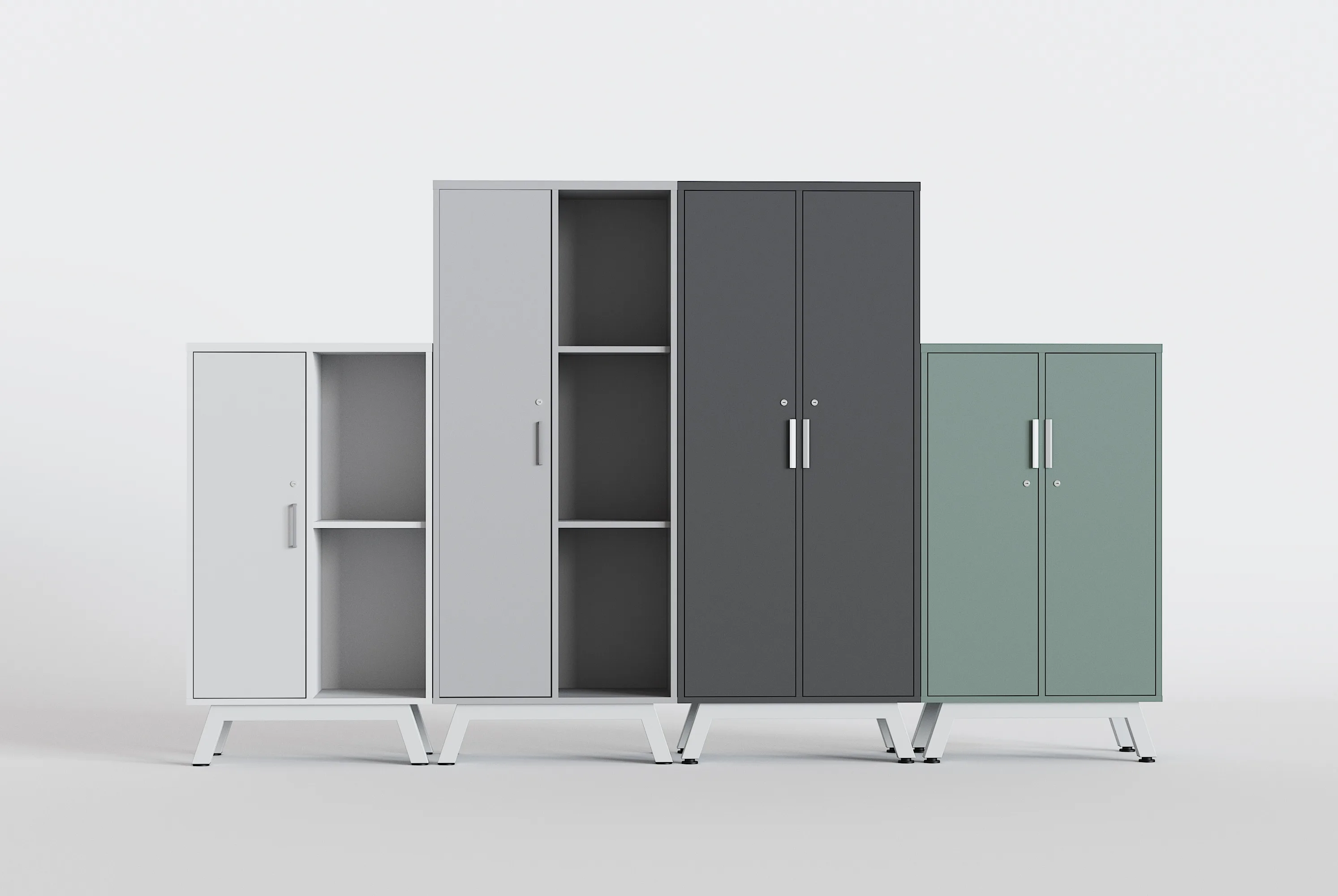
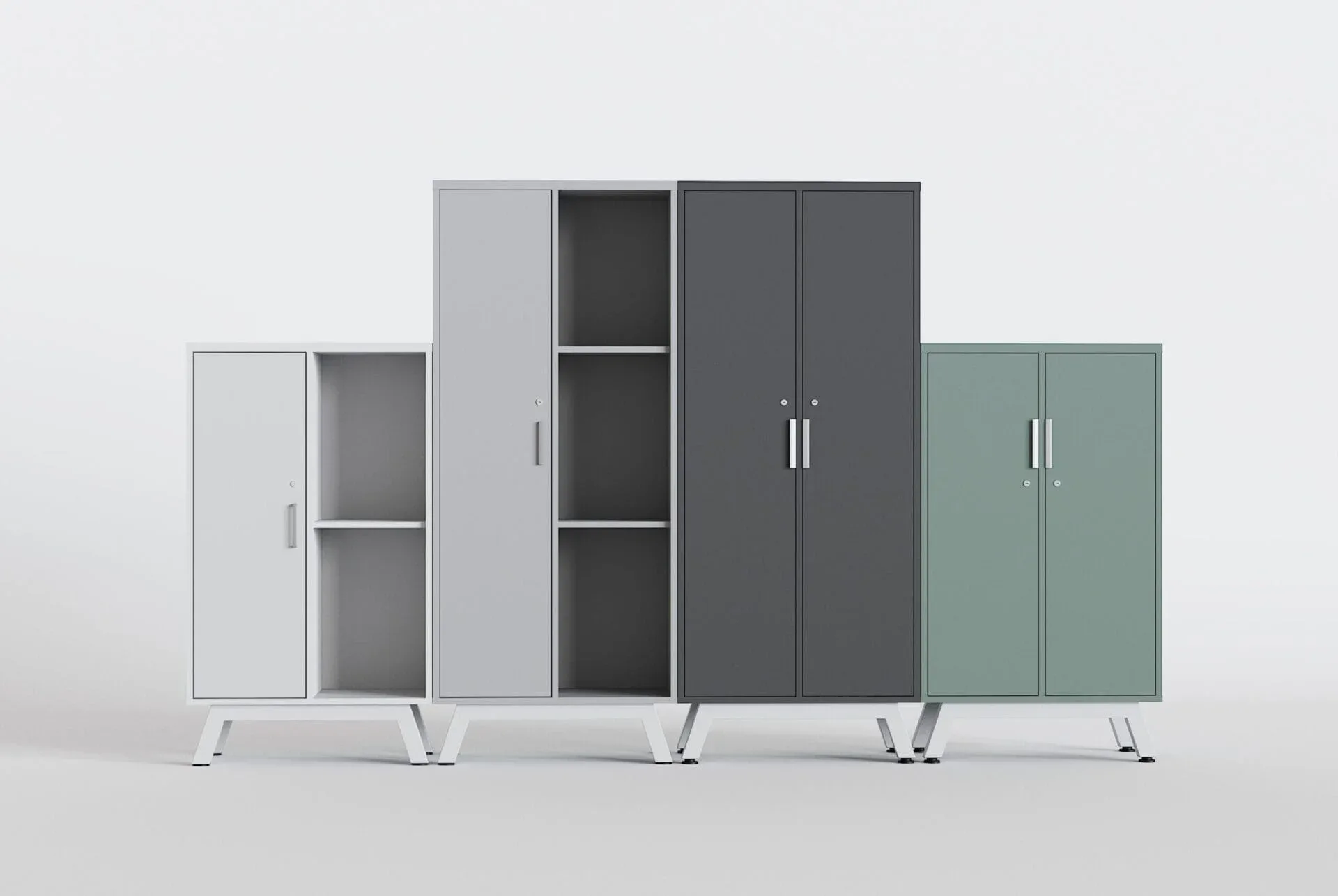
- Steel cabinets with doors: ideal for storing archive boxes, stationery supplies, or high-volume documentation with a security lock.
- Mobile pedestals: lightweight but reinforced, designed to sit under the desk and keep everyday documents within reach.
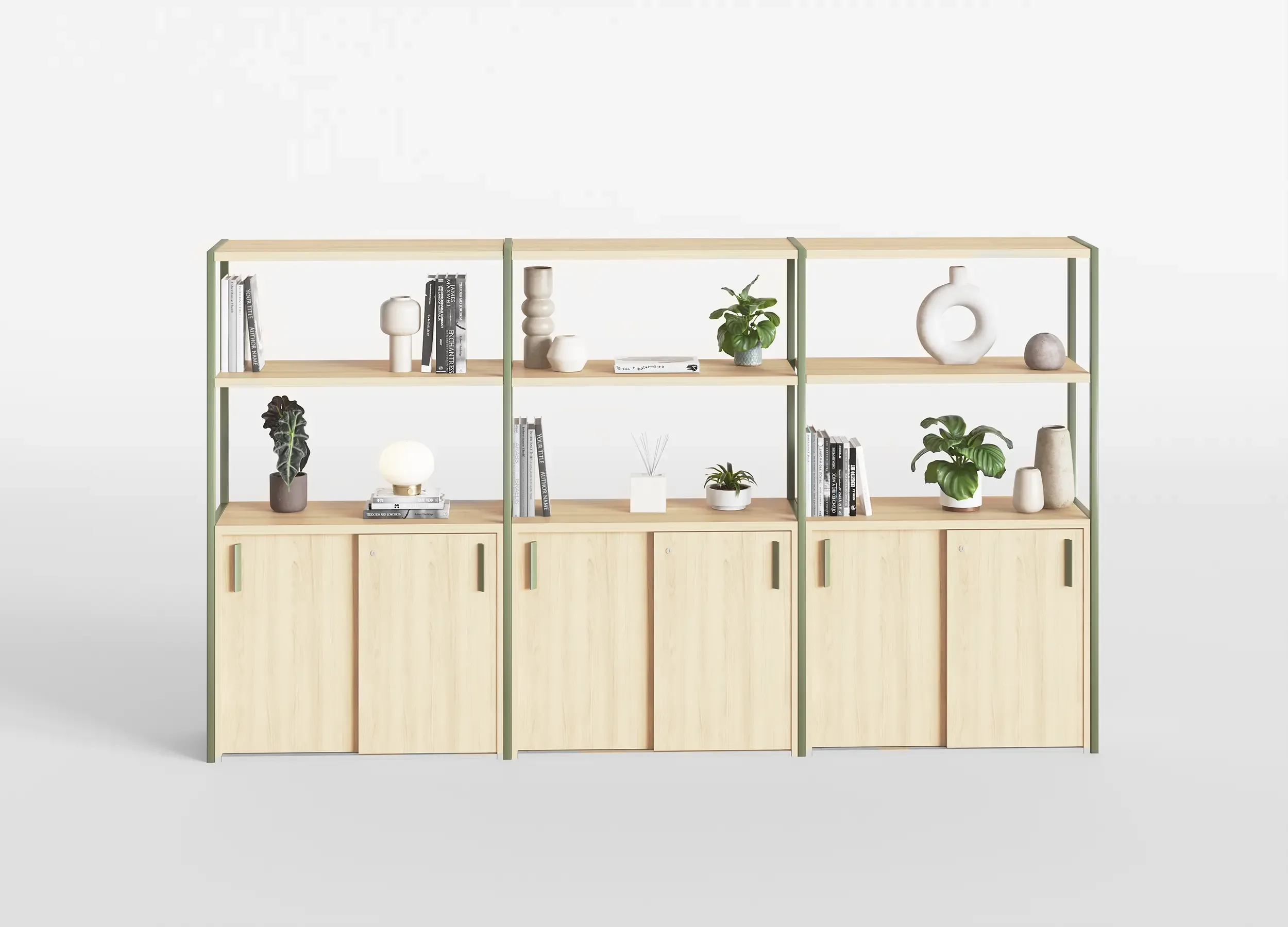
- Combination units with shelving: integrate drawers and shelves to optimize storage in administrative areas.
Discover the different options in our storage section.
Which Company Departments Need Them Most?
- Human Resources: personnel files, contracts, and payroll records.
- Legal Department: agreements, meeting minutes, powers of attorney, and corporate documentation.
- Accounting and Finance: tax receipts, financial statements, and documentation subject to mandatory retention.
- Executive Management and executive areas: strategic and confidential information.
- Purchasing and Operations: vendor contracts, purchase orders, and project documentation.
These systems can be seamlessly integrated into executive area projects and administrative workstations.
How to Choose the Right Steel Filing Cabinet
- Classify your documentation. Distinguish between frequently accessed information, historical archives, and confidential documents to determine what needs a lock and what level of protection.
- Calculate current and projected volume. Factor in document growth over the coming years so you don't come up short.
- Verify load capacity. Confirm with the manufacturer how much weight each drawer and the entire structure can support.
- Evaluate the available space. Measure hallways and drawer clearance zones to make sure the cabinet can be used comfortably.
- Think about visual integration. Choose finishes and proportions that match the rest of your office furniture.
- Define a key protocol. A secure filing cabinet loses its value if key handling isn't controlled; assign responsible people and keep a log.
Common Mistakes When Choosing Steel Filing Cabinets
- Buying on price without checking the gauge. An inexpensive cabinet made of thin sheet metal can warp and fail in a short time.
- Not verifying the anti-tip system. This is a matter of personal safety, not just document protection.
- Overlooking slide quality. Drawers that stick damage documents and cause daily frustration.
- Not defining who has access to the keys. The best lock is useless if keys circulate without control.
- Underestimating document growth. Coming up short forces you to buy additional furniture that rarely matches the existing pieces.
- Neglecting placement. Putting sensitive documents in high-traffic areas without access restrictions undermines the value of any security mechanism.
Document Security: Beyond the Furniture
The filing cabinet is one part of an information protection system, but not the only one. It should be complemented with:
- Internal policies for document classification and access.
- A log of file check-outs and loans.
- Administrative areas with restricted access.
- Digital backups of critical documentation.
- Periodic inspection of locks, slides, and structure.
How Línea Italia Can Help
At Línea Italia, we design, manufacture, and install storage solutions for corporate offices, designed to integrate into a complete furniture project. Our team analyzes the real needs of each department, from document volume to level of confidentiality, to propose a solution that is functional, secure, and consistent with the rest of the space.
Explore our corporate furniture collections and see real examples in our projects section.
Conclusion
Heavy-duty steel filing cabinets are an investment in security, organization, and operational continuity. A sturdy steel structure, reliable locks, an anti-tip system, and quality slides are the key to a cabinet that does its job for years. Choosing well means classifying your documentation, projecting growth, and coordinating the design with the rest of the office.
Do you need to keep your company's documentation securely stored? Request a proposal from our team of specialists and find the ideal storage solution for your office.