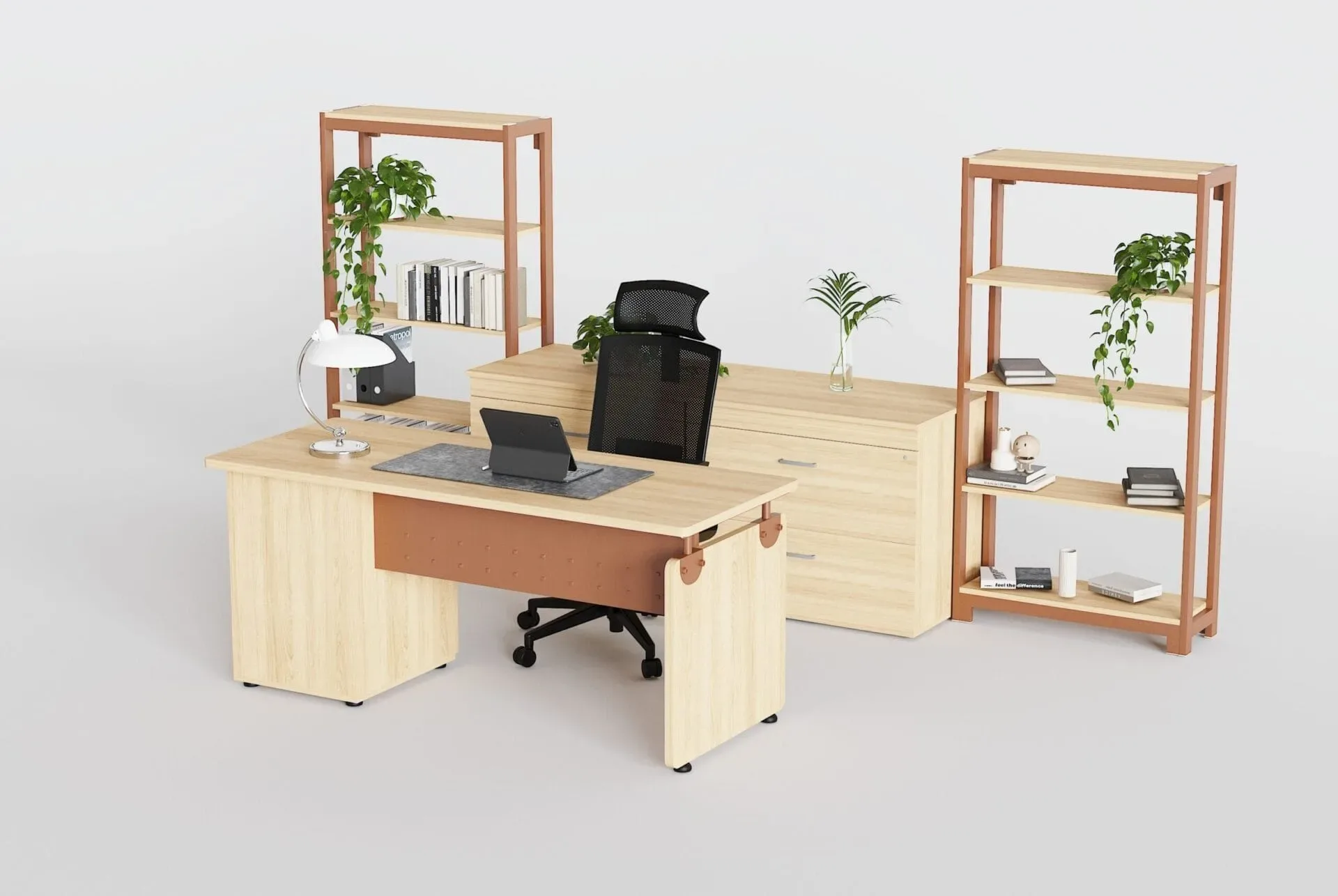
A graphic designer, an architect, an illustrator, a video editor, or a creative director doesn't work like other office profiles. Their desk holds two or three monitors, a graphics tablet, printed sketches, material samples, a laptop, notebooks, and sometimes even scale models. When the surface isn't big enough, the work gets interrupted: objects pile up, order is lost, and creativity gets slowed down by logistics.
That's why choosing spacious desks for creatives and designers isn't a matter of luxury space, but a productivity decision. In this article, we look at which dimensions to consider, which materials work best, which configurations are available, how to look after ergonomics, and which mistakes to avoid when equipping a creative area.
Why Do Creative Professionals Need More Work Surface?
Creative workflows are different from administrative ones. They're characterized by:
- Multiple screens: two or more monitors, sometimes large-format and color-calibrated.
- Physical and digital tools at the same time: tablets, digital pens, specialized keyboards, scanners, paper sketches.
- Review of printed material: color proofs, blueprints, finish samples, or visual references.
- Work in simultaneous stages: several open projects that require quick access.
- Occasional collaboration: showing proposals to colleagues or clients right on the desk.
A small surface forces constant moving and storing, interrupting the concentration that creative work requires.
Recommended Dimensions
There's no one-size-fits-all measurement, but these references can help guide your decision:
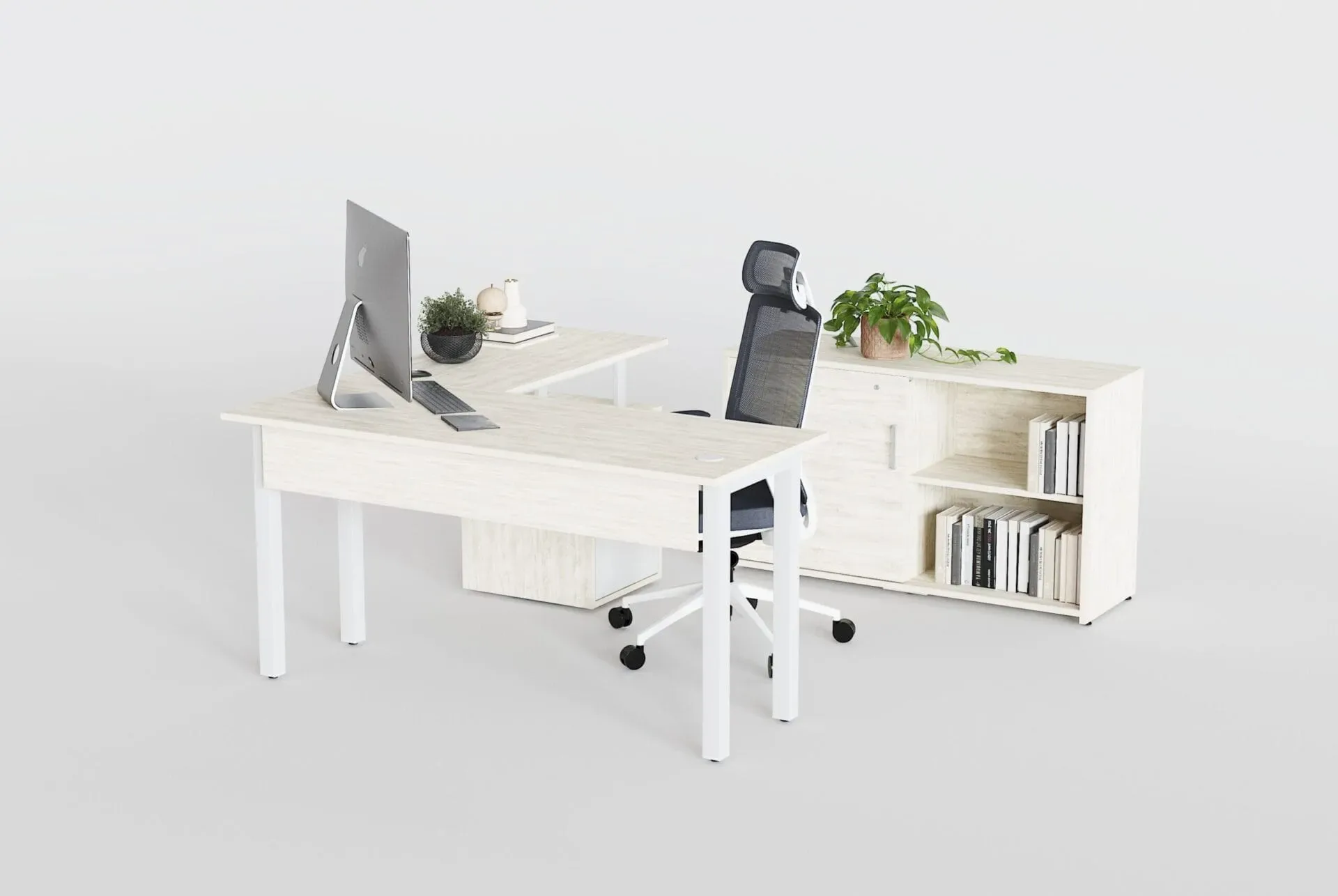
- Width: 160 cm (about 63 in) or more for a two-monitor setup; between 180 and 200 cm (71 to 79 in) if you also need an area for sketches or printed material.
- Depth: at least 70 to 80 cm (28 to 31 in); 80 to 90 cm (31 to 35 in) when using large monitors, which need an adequate viewing distance.
- Height: around 72 to 75 cm (28 to 30 in) for fixed models, or height-adjustable if space allows, so that forearms stay close to 90 degrees while working.
- Underside clearance: enough room for legs and for moving the chair freely.
These figures are guidelines: the ideal approach is to assess the type of work and the available space before deciding.
Most Commonly Used Configurations
Large-Format Rectangular Desk
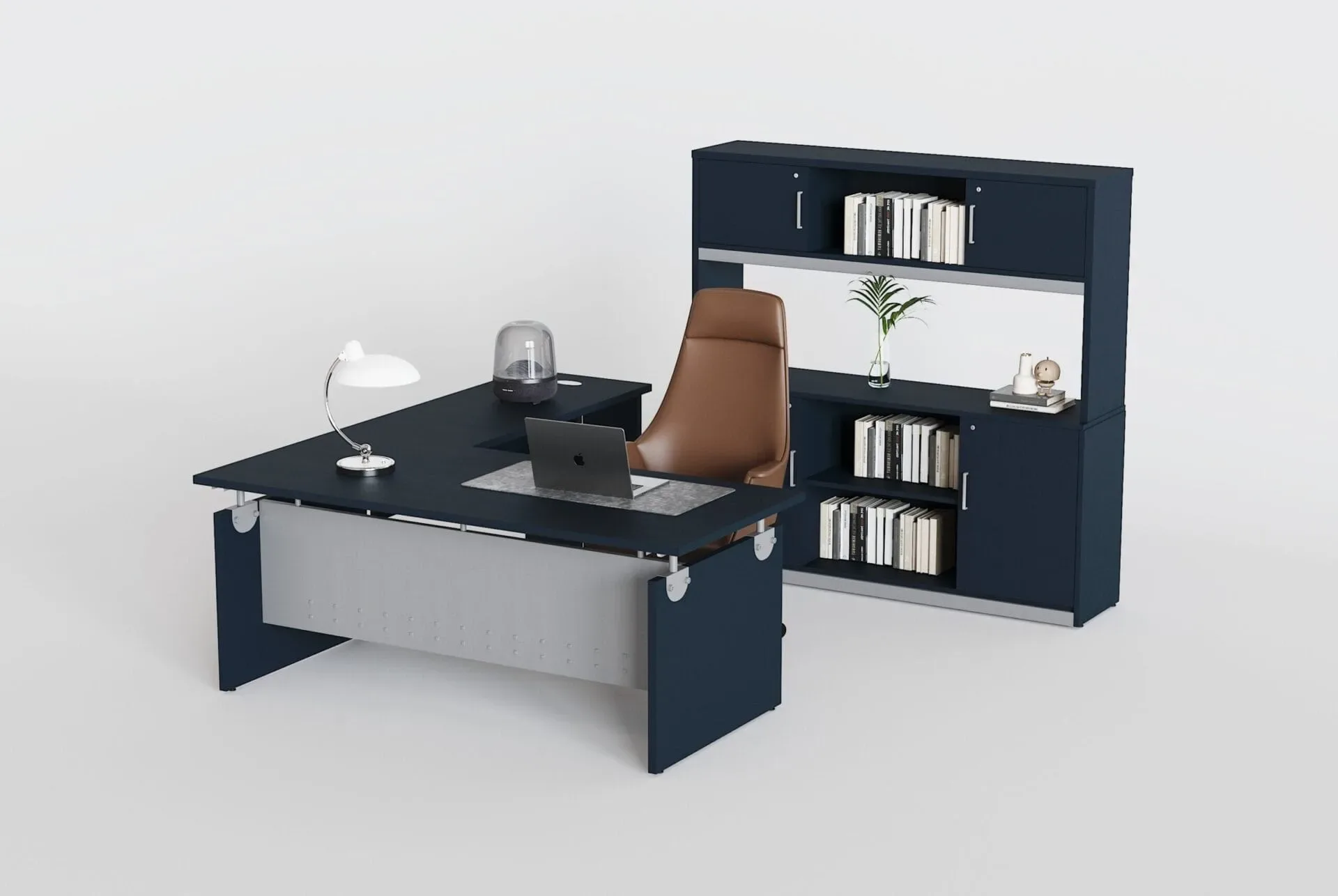
The most versatile option. It offers a continuous surface for monitors and a hands-on work area. It works well for individual workstations and compact studios.
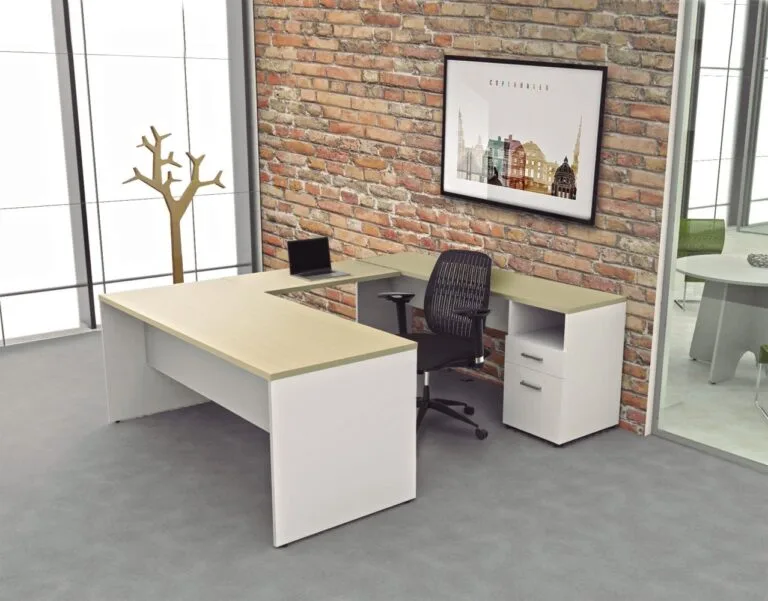
L-Shaped Desk
It separates the digital zone from the sketching or material review zone. One side holds the monitors and keyboard; the other serves as an auxiliary table for hands-on work.
U-Shaped Desk
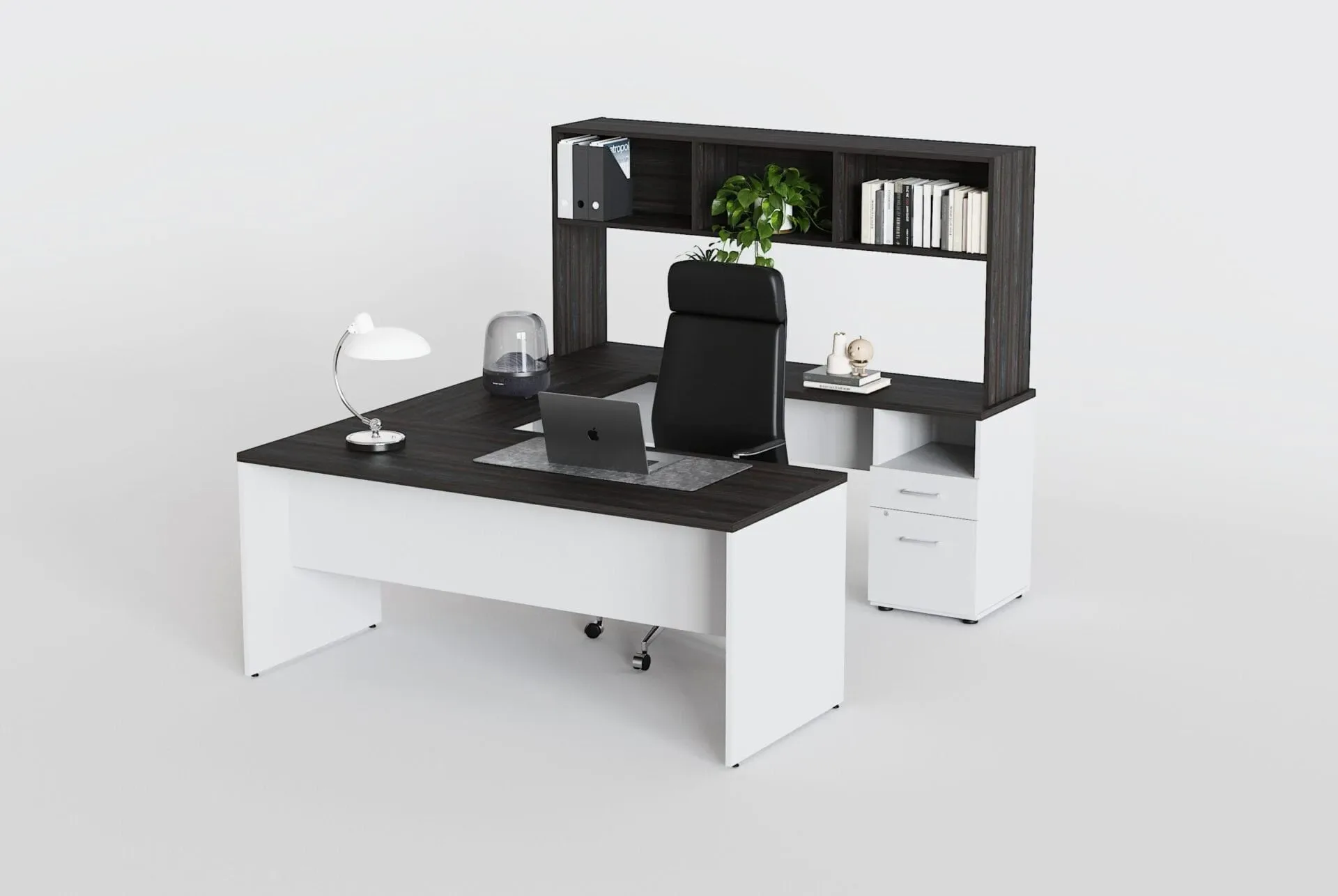
Designed for profiles that juggle many elements at once, such as video editing or art direction. It offers comfortable reach to everything from the chair, although it requires more space.
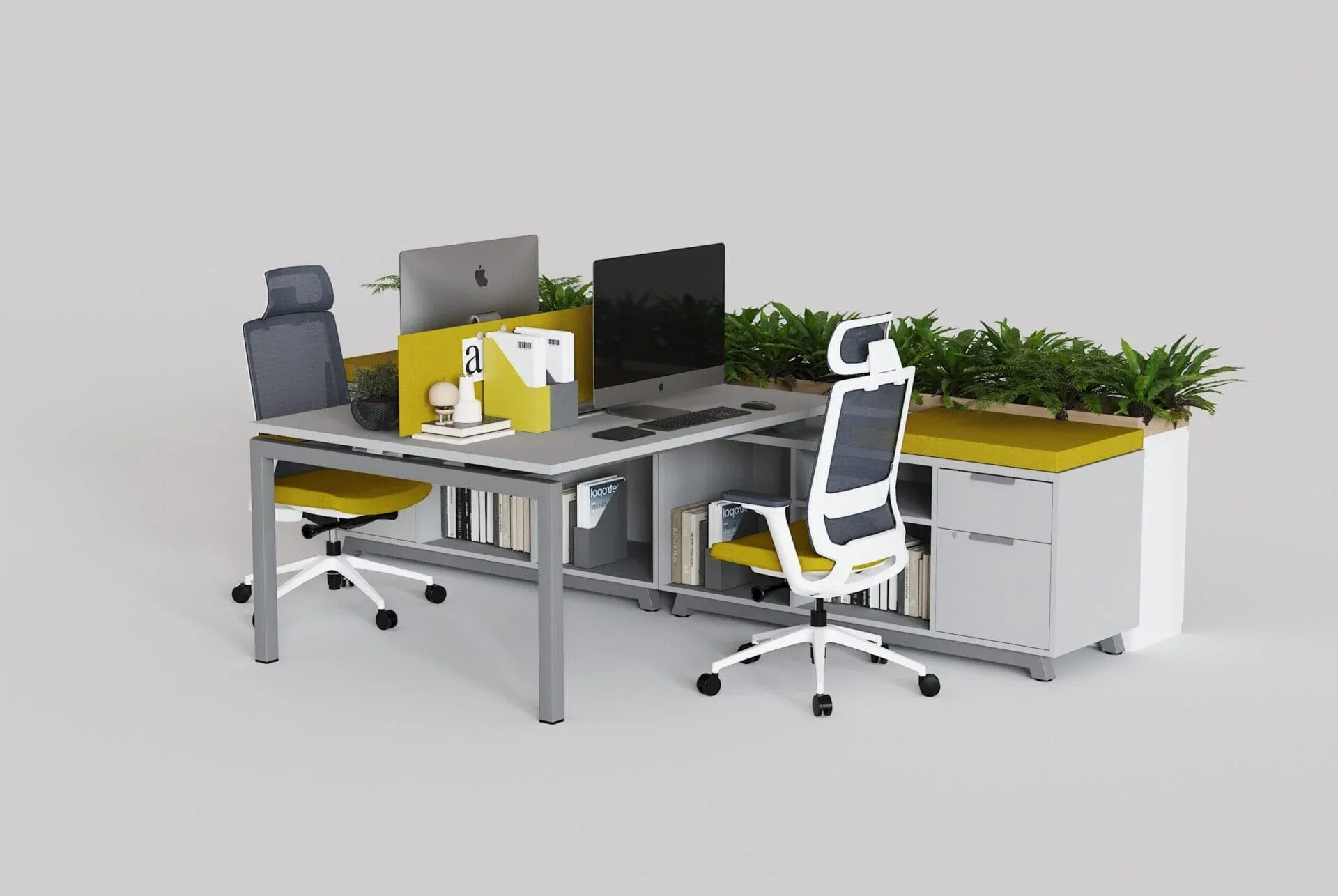
Bench-Style Workstations
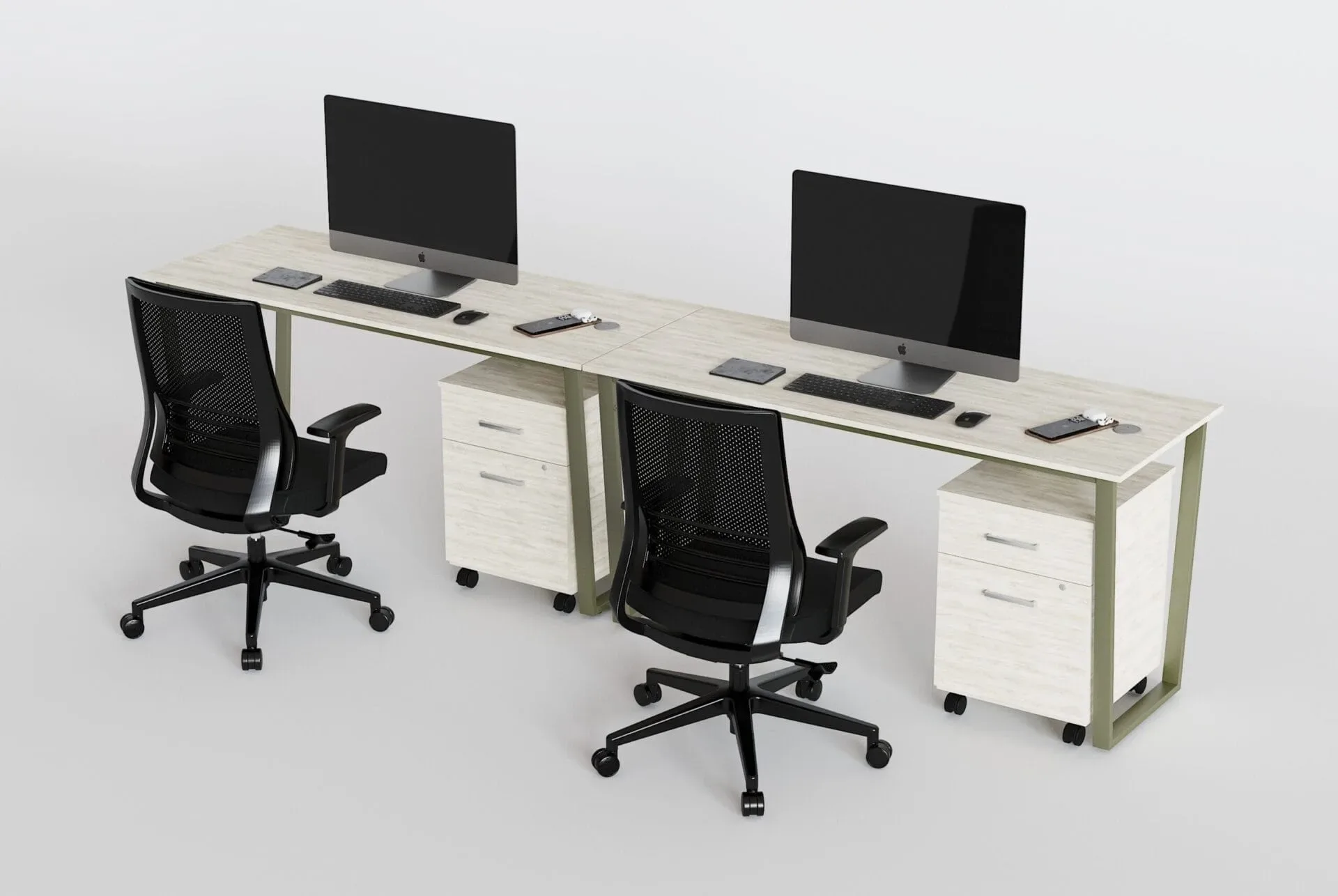
For creative teams that work close to one another, share references, and benefit from constant communication. Check out our workstations.
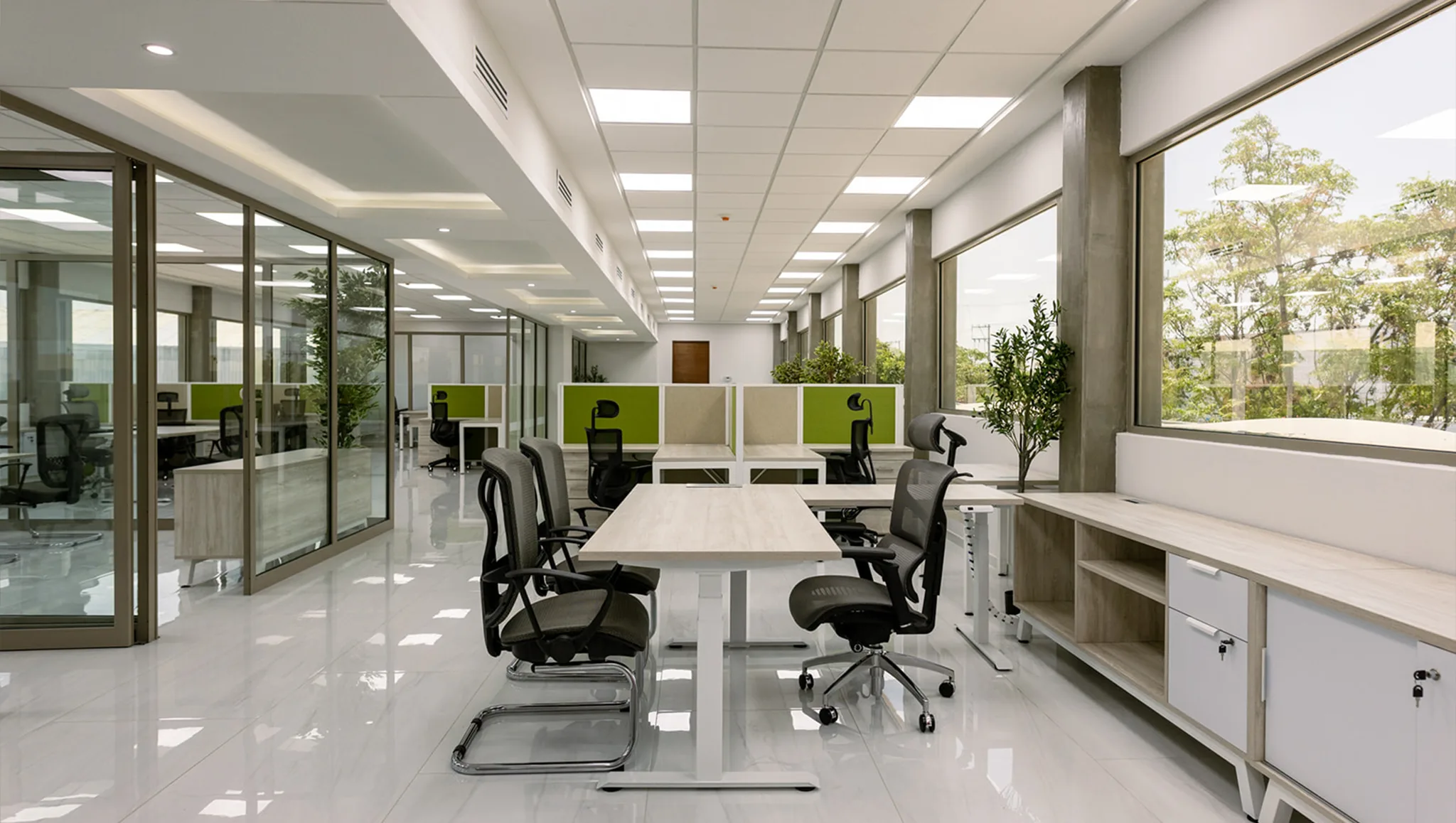
Collaborative Work Tables
Large surfaces for spreading out blueprints, reviewing prototypes, or holding team sessions, an ideal complement to individual workstations.
Discover the available alternatives in our desks section.
Materials and Finishes That Work Best
Durable, Low-Glare Surfaces
Matte laminates avoid annoying reflections from screen and lamp light, which matters when working with color. They also resist the scratches, cuts, and stains that come with working materials.
Neutral and Warm Tones
Whites, grays, light woods, or understated dark tones act as a neutral canvas. A visually calm environment helps you judge on-screen colors more accurately.
Wood-Look Finishes
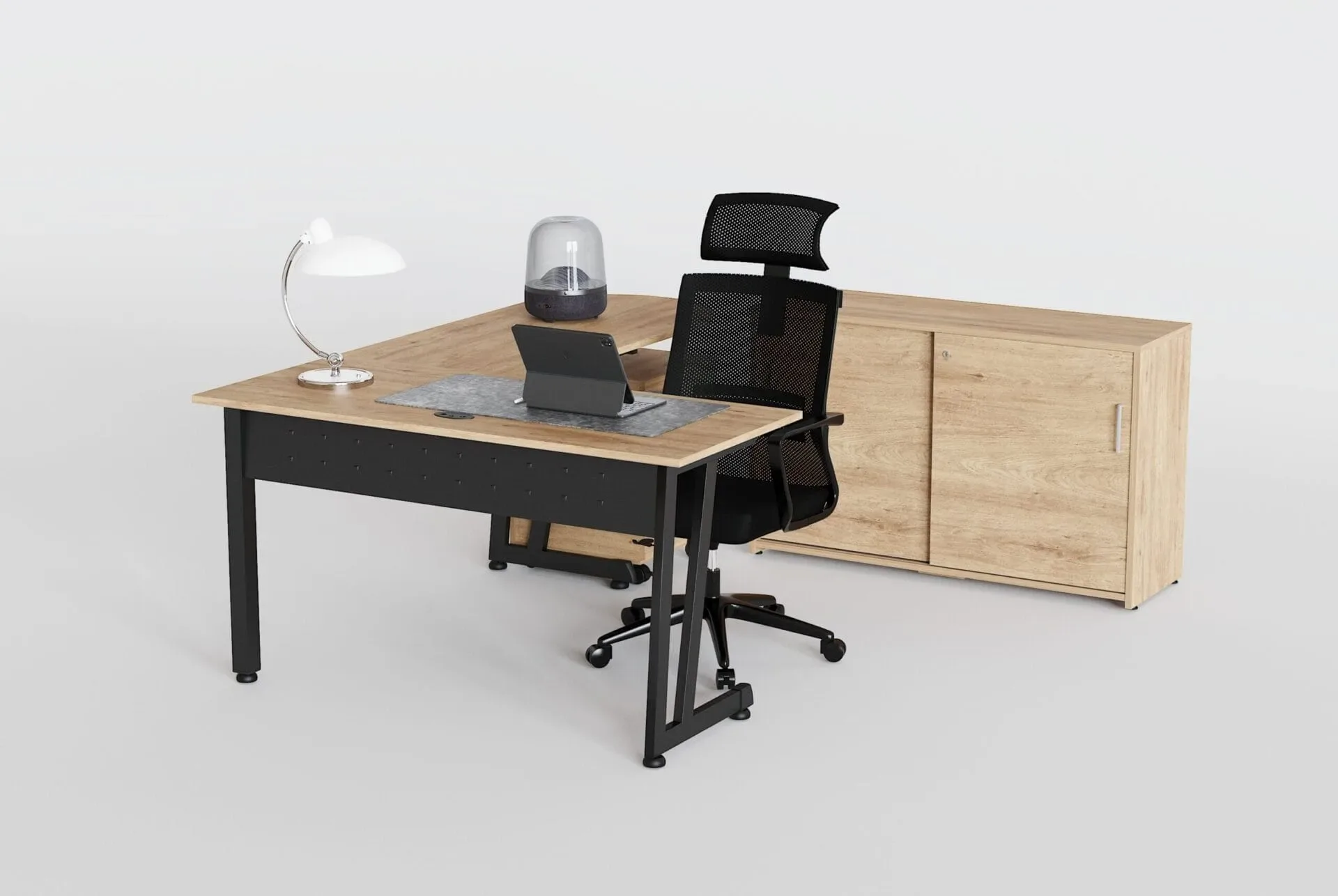
They add warmth and keep the creative area from feeling cold. They pair well with discreet metal frames. If you like this combination, check out our article on industrial desks as an office design trend.
Stable Frames
A rigid frame prevents vibrations when drawing or writing, a critical detail for those who use graphics tablets or do precision work.
Explore the possible combinations in our finishes section.
Ergonomics for Long Creative Sessions
Creatives often work in long, highly focused sessions, which increases the risk of accumulated strain.
- Monitor height: the top edge should sit roughly at eye level.
- Viewing distance: between 50 and 70 cm (20 to 28 in) from the screen, depending on its size.
- Keyboard, mouse, and tablet position: within reach without stretching the shoulders or straining the wrists.
- Forearm support: rounded edges and enough surface area to rest on.
- Breaks and posture changes: height-adjustable desks make it easy to alternate between sitting and standing.
To dig deeper, read our guide on ergonomic desks and the features they should include and complete your workstation with a good chair. Explore our office chairs and our article on chairs that improve posture while you work.
Organization: Creativity's Silent Ally
A large surface only helps if it stays tidy. It's worth planning for:
- Pedestals and cabinets to keep materials, samples, and tools out of sight. Discover our storage solutions.
- Cable management with cable trays and grommets, essential when there are multiple devices.
- Accessible outlets and ports so you don't have to crawl under the desk.
- Defined zones: one area for the screen, another for hands-on work, and another for references.
- Vertical surfaces: panels or screens for pinning up inspiration and sketches without taking up desk space.
Acoustics and Privacy in Creative Areas
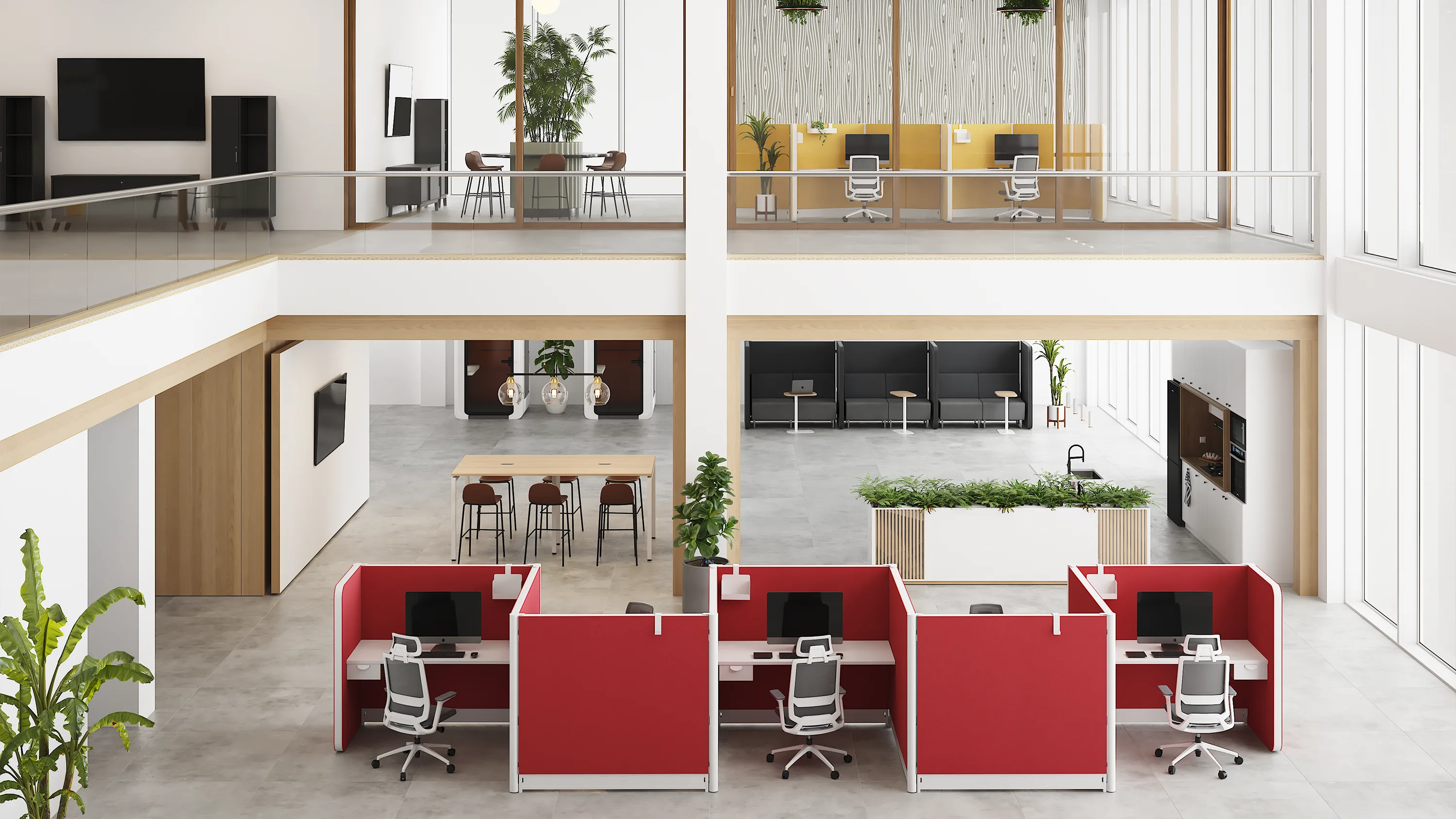
Creative spaces combine moments of deep concentration with sessions of exchange. To balance the two, consider screens and panels with acoustic properties, which allow you to define zones without isolating the team. Explore our acoustic solutions for offices and our article on movable partitions and flexibility without fixed installation.
Which Profiles and Companies Is It Ideal For?
- Design, advertising, and marketing agencies.
- Architecture and interior design studios.
- UX/UI and digital product teams.
- Audiovisual and video editing production companies.
- Communication and design departments within corporations.
- Freelancers and coworking spaces with a creative focus.
Common Mistakes When Choosing Desks for Creatives
- Skimping on depth. A wide but shallow desk forces you to sit too close to the monitor.
- Choosing glossy surfaces. Reflections tire the eyes and affect color perception.
- Ignoring cabling. Multiple devices without management create visual clutter and a tripping hazard.
- Not considering underside clearance. Poorly placed drawers restrict leg movement.
- Underestimating stability. A desk that vibrates hurts precision work.
- Forgetting about storage. Without somewhere to put things, the large surface fills up with clutter.
- Not coordinating with the chair and surroundings. A good desk paired with an unsuitable chair loses much of its benefit.
- Choosing on looks alone. The design should add to the workflow, not compete with it.
How Línea Italia Can Help You Equip Your Creative Area
At Línea Italia, we design, manufacture, and install corporate furniture built around how each team really works. We understand the needs of creative professionals, analyze the space, propose configurations with 3D visualization, and support manufacturing, installation, and delivery, bringing together desks, seating, storage, and partitions into one cohesive solution.
Learn about our process in space design, explore our corporate furniture collections, and see real examples in our projects section.
Conclusion
Spacious desks for creatives and designers are a work tool, not a luxury. A generous, stable, well-organized surface lets you handle multiple screens and materials smoothly, look after ergonomics during long sessions, and keep your mind focused on what matters: creating. The key is to size the desk to your real workflow, choose low-glare materials, plan for storage and cabling, and think of the workstation as part of a complete space.
Want a space where your creative team can work comfortably? Request a proposal from our team of specialists and let's design the ideal area for your creatives together.