
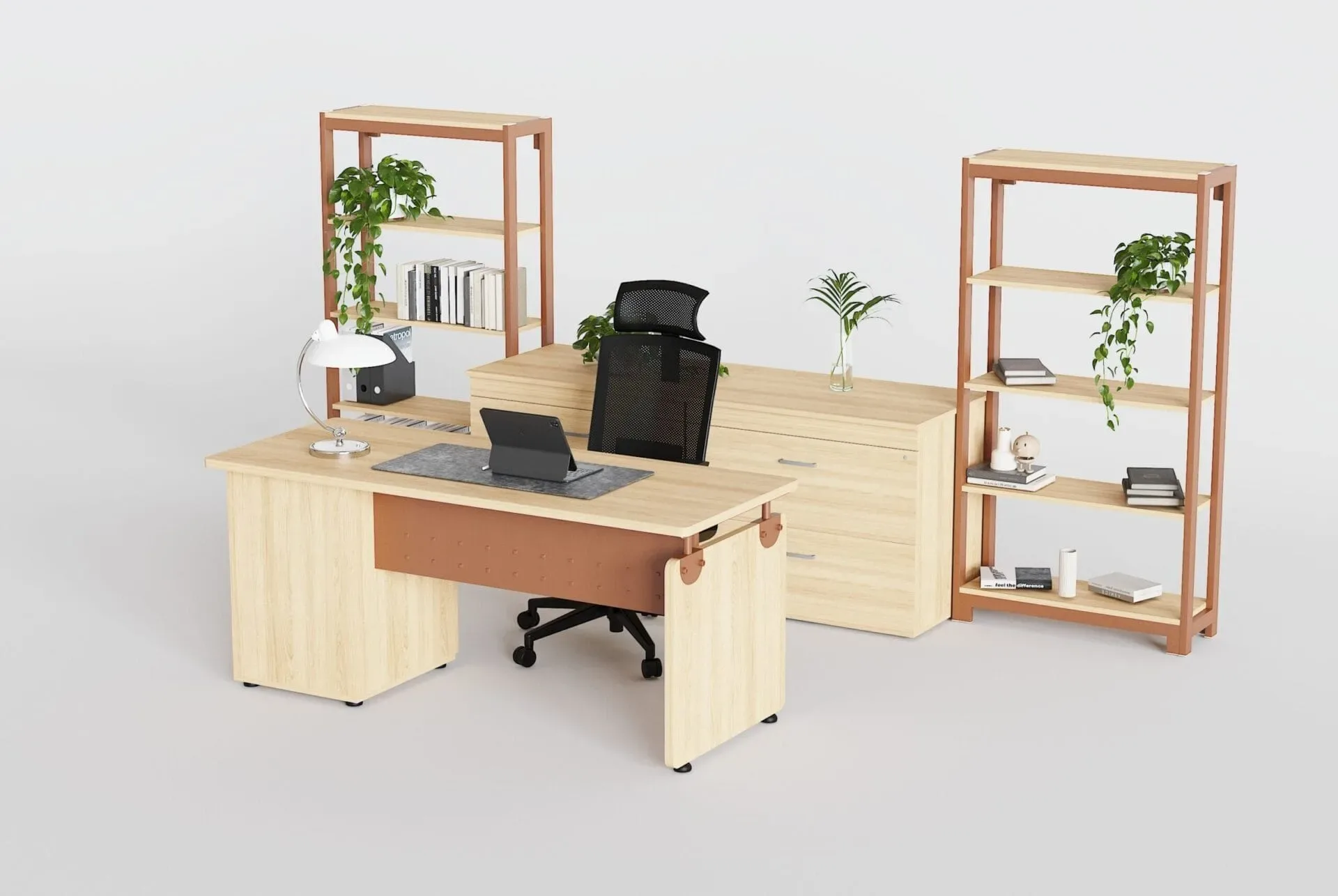
Spending six to nine hours a day seated at a desk is no small detail. It is one of the variables with the greatest impact on postural health, productivity, and the overall well-being of a team. Yet when furnishing an office, desks are often chosen for looks or price, while a decisive factor takes a back seat: ergonomics.
An ergonomic desk is not simply a well-designed piece of furniture. It is a work tool built to adapt to the human body and reduce the physical fatigue that comes with long workdays. In this article, we take a detailed look at what features a truly ergonomic desk should have, why they matter, and how to choose the right one for your office.
What Does It Mean for a Desk to Be Ergonomic?
An ergonomic desk is one designed around the dimensions, movements, and postural needs of the human body throughout the workday, with the goal of reducing muscle tension, poor posture, and eye strain. It isn’t just about the height of the work surface. It’s a set of features that, taken together, determine how healthy it is to spend hours at that piece of furniture.
Essential Features of an Ergonomic Desk
1. Proper or Adjustable Height
Desk height is probably the single most important ergonomic factor. A surface that is too high or too low forces users to raise their shoulders or hunch their backs, causing tension to build up over the course of the day.
- Standard fixed height: Should be calculated based on the average height of the people who will use the space.
- Adjustable height (sit-stand): Lets users alternate between sitting and standing throughout the day, reducing prolonged postural strain and promoting circulation.
More and more companies are adding height-adjustable desks to their workplace wellness strategies, especially in areas with intensive screen-based work.
2. Sufficient Depth and Work Surface
An ergonomic desk should be deep enough to maintain a proper distance between the eyes and the monitor (generally 20 to 28 inches, or 50 to 70 cm), along with enough room for the keyboard, mouse, documents, and other work items, without forcing the user into awkward postures to reach them.
3. Free Legroom
A common mistake in workstation design is overlooking the space beneath the desk. Poorly placed drawers, enclosed structures, or badly positioned supports can restrict leg movement and force users into uncomfortable angles. A good ergonomic design allows enough open space to stretch the legs and shift positions freely.
4. Integrated Cable Management
Although it isn’t an ergonomic factor in the strictly postural sense, poor cable management forces users to make awkward movements to plug in or unplug devices, and it creates tripping hazards. Well-designed ergonomic desks include channels, grommets, or dedicated compartments to keep cables organized and out of the direct work area.
5. Durable, Easy-to-Maintain Surface
The work surface should resist scratches, bumps, and stains, given heavy daily use. Materials like high-density laminates offer a good balance of durability, appearance, and ease of cleaning.
6. Rounded Edges and Safe Materials
Edges should be designed to avoid uncomfortable pressure points on the forearms during long hours at the keyboard. Rounded or ergonomically contoured edges reduce pressure in this area, lowering the risk of muscle discomfort.
7. Compatibility with Complementary Ergonomic Accessories
An ergonomic desk should accommodate additional elements such as monitor arms, laptop stands, cable organizers, or keyboard trays without compromising the stability or look of the overall setup.
8. Structural Stability
Whether the desk is fixed or height-adjustable, it must be completely stable in use, with no wobbling or movement when typing or resting the arms. An unstable structure isn’t just uncomfortable. It can create extra strain as users try to compensate for the movement of the furniture.
The Relationship Between Desk, Chair, and Posture
No desk, however ergonomic, does its job in isolation. The ergonomics of a workstation depend on the right combination of desk, chair, and complementary accessories. A poorly chosen chair can completely cancel out the benefits of a well-designed desk, and vice versa.
We recommend choosing office chairs whose height and proportions match the dimensions of the selected desk, prioritizing lumbar support and adjustable armrests to properly complement the user’s posture.
Ergonomic Desks in Shared Workstations
When equipping areas with multiple work positions, ergonomics needs to be considered at the system level, not just for each individual piece of furniture. Modular configurations make it possible to maintain consistent ergonomic standards across an entire area, integrating divider panels, shared cable management, and uniform surfaces for the whole team.
See how these principles are applied in our workstations section, and explore options for teams of different sizes in our desks section.
Ergonomics in Executive Areas
Ergonomics shouldn’t be reserved for operational workstations. Executive areas, where directors and managers spend equally long days at their desks, should follow the same ergonomic principles, combined with finishes and materials that reinforce the visual hierarchy of the space without sacrificing functionality. Discover these solutions in our executive areas section.
Common Mistakes When Choosing an “Ergonomic” Desk
- Confusing modern design with true ergonomics. A desk with a minimalist look doesn’t guarantee that its dimensions or proportions suit the human body.
- Ignoring the average height of users. Installing fixed-height desks without considering who will use them can cause widespread discomfort across the team.
- Overlooking legroom. Prioritizing under-desk storage without leaving enough open space directly compromises the user’s posture.
- Skimping on the right chair. An excellent ergonomic desk loses much of its benefit when paired with an unsuitable chair.
- Neglecting cable management. An ergonomic desk with messy cables creates daily friction and undermines the overall sense of order in the space.
How Línea Italia Can Help You Furnish Your Office Ergonomically
At Línea Italia, we design and manufacture desks built for the real well-being of the people who use them every day, whether in shared workstations, executive areas, or high-turnover spaces. Our team supports the entire project, from the ergonomic analysis of the space through the manufacturing, delivery, and installation of the furniture.
Explore our corporate furniture collections and see real projects where we’ve applied these ergonomic principles.
Conclusion
An ergonomic desk goes far beyond a design trend. It is a direct investment in the health, well-being, and productivity of your team. Proper height, sufficient depth, free legroom, cable management, and compatibility with complementary accessories should always be evaluated together, never in isolation from the rest of the office furniture system.
Want to equip your office with truly ergonomic furniture? Request a proposal from our team of specialists and discover the ideal solution for your team’s well-being.