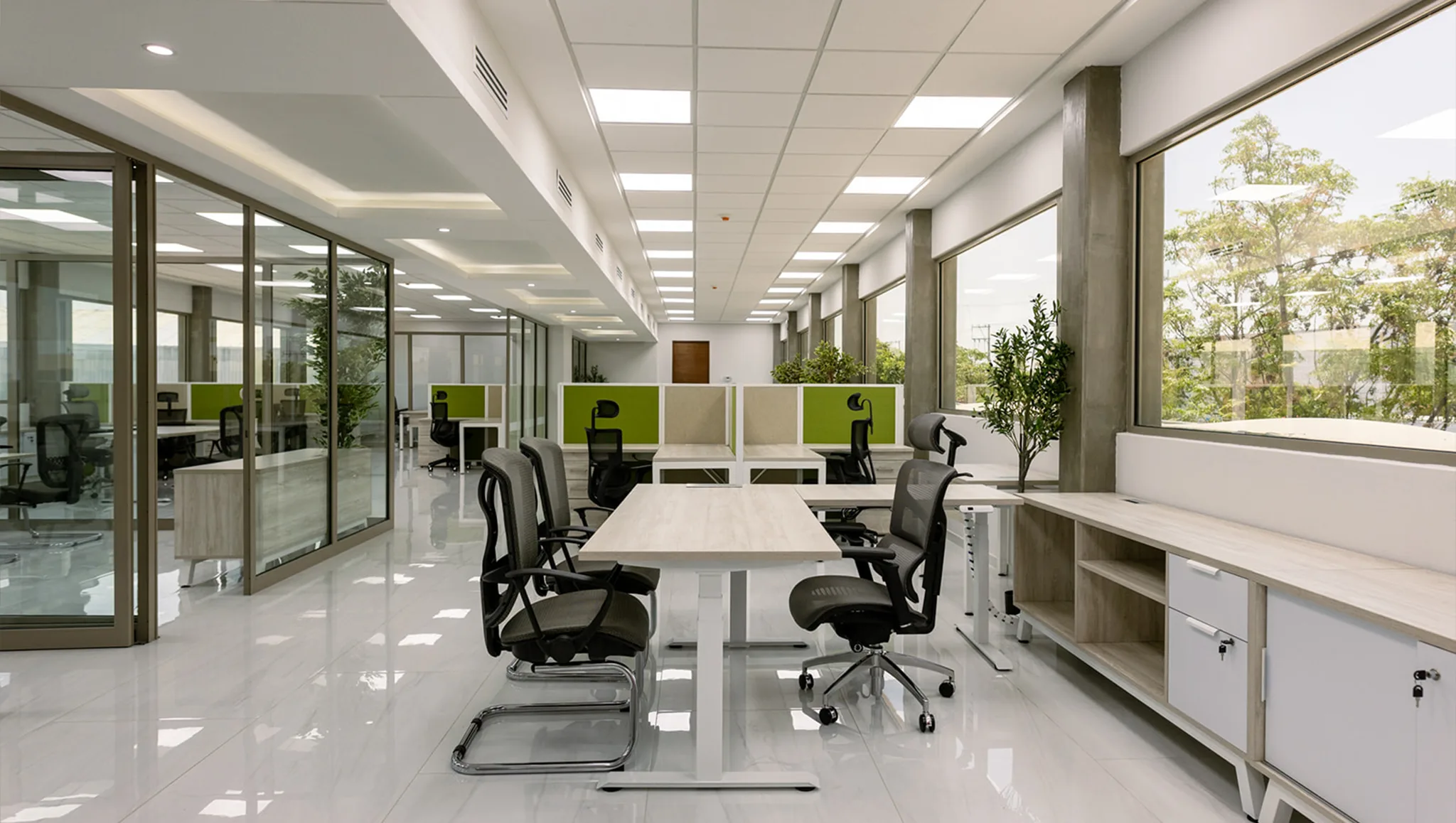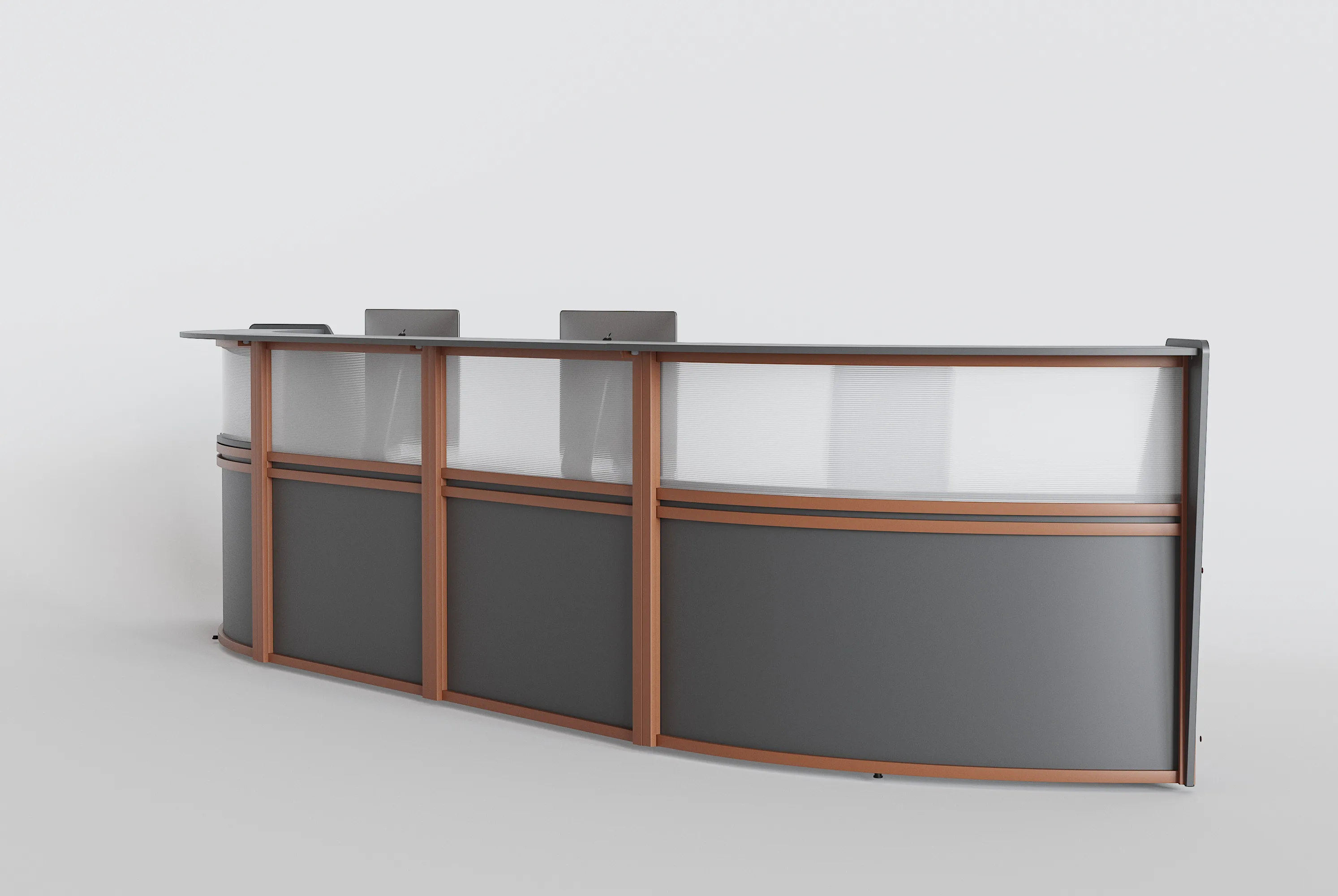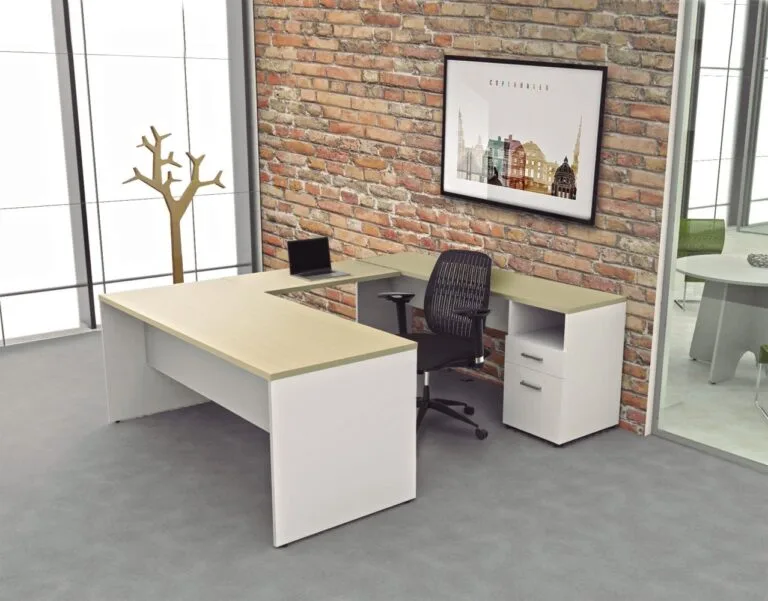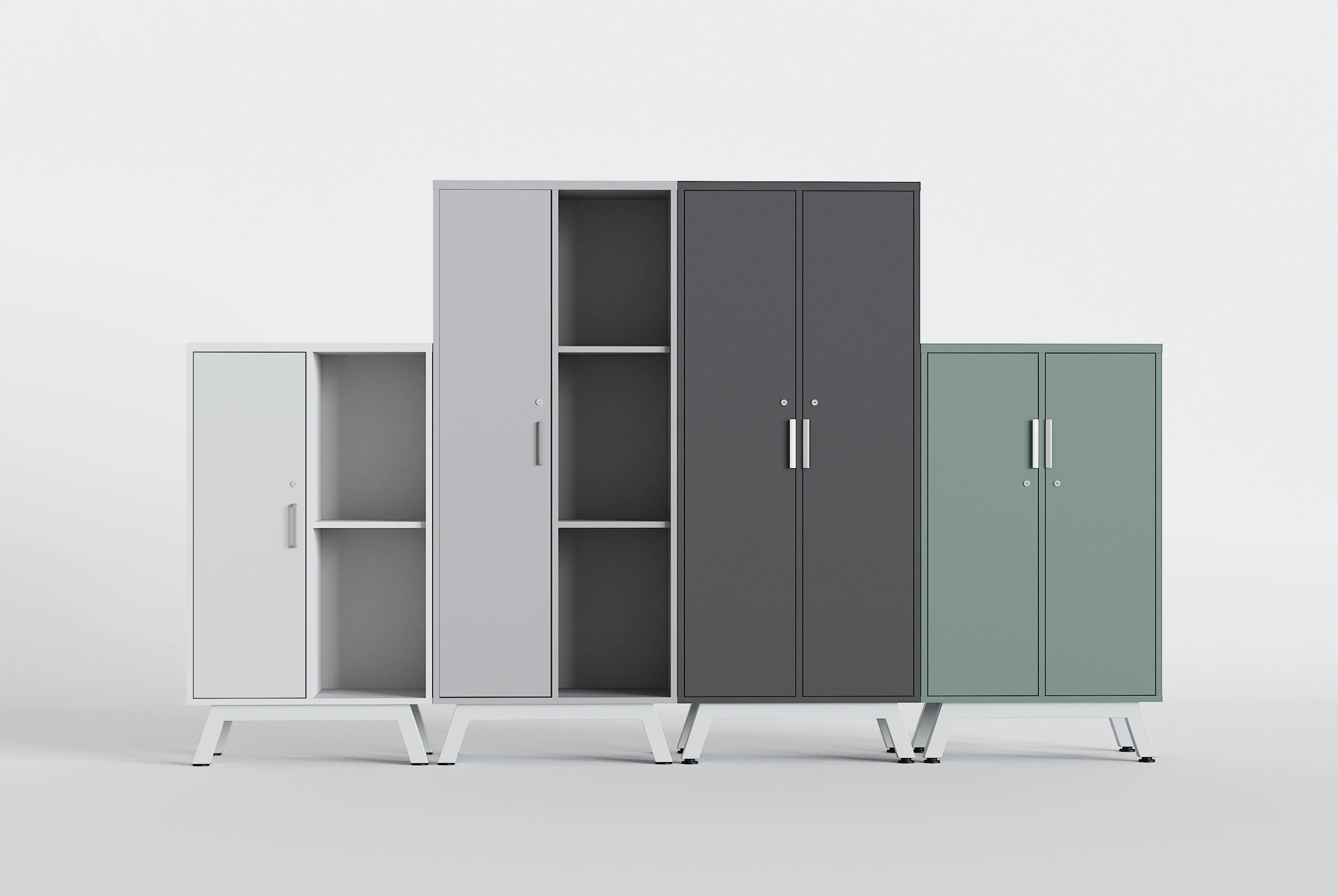
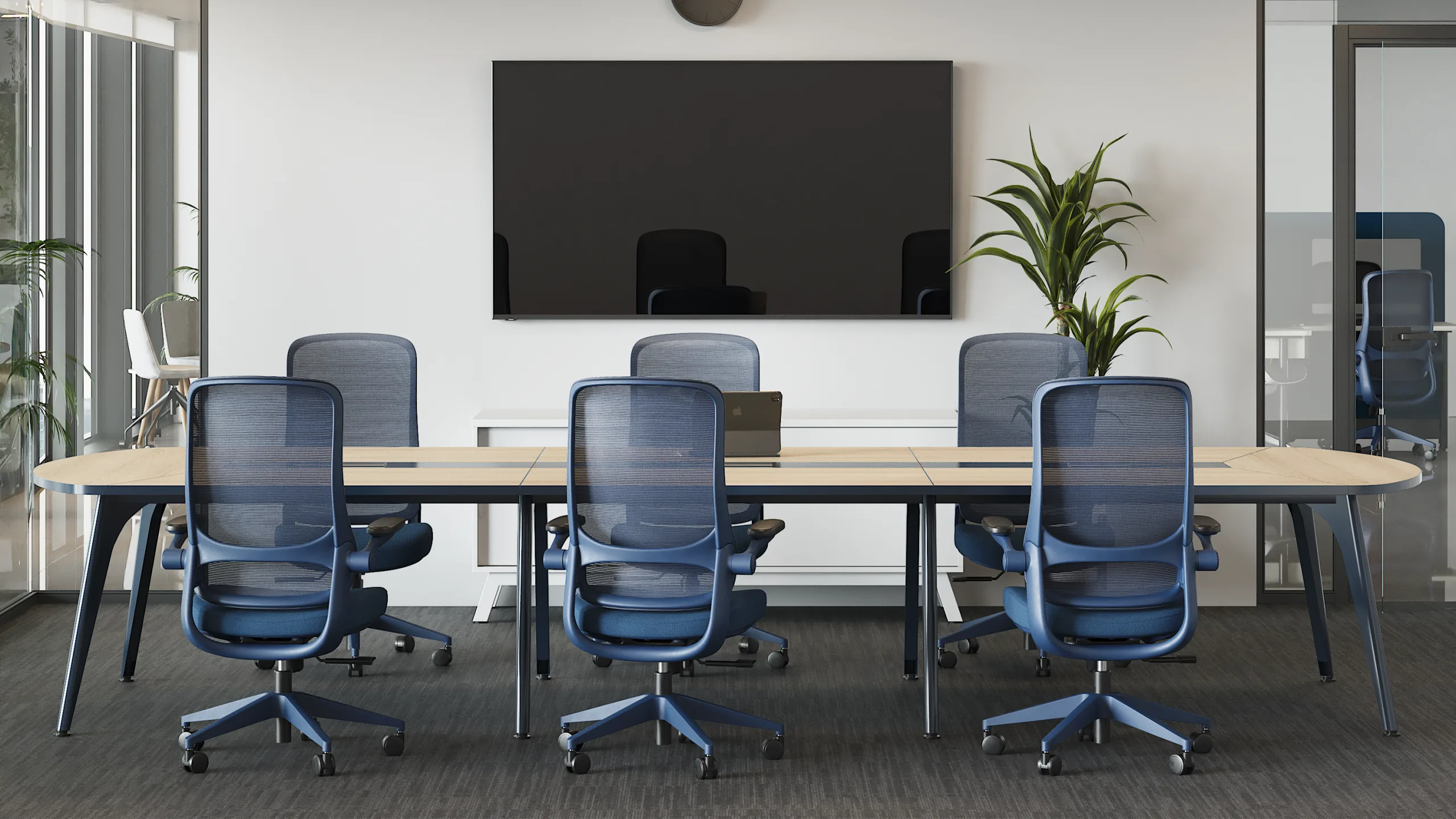
For years, corporate offices were designed with an almost uniform logic: white surfaces, neutral tones, and discreet furniture meant not to draw attention. Today that logic is changing. More and more companies want spaces with character, honest materials, and a visual identity that reflects their culture. In this context, the industrial style has established itself as one of the strongest trends in office design.
Industrial desks are the piece that best translates this aesthetic into everyday work: visible metal frames, wood-textured surfaces, and a sense of solidity that communicates authenticity and functionality. In this article, we review what defines this style, why it is gaining ground in corporate environments, which materials and configurations are available, and how to integrate it without sacrificing ergonomics, order, or a professional image.
What is industrial style in office furniture?
Industrial style draws its inspiration from factories, workshops, and warehouses converted into workspaces. Its visual language is based on:
- Exposed metal structures, in matte black, graphite, or steel.
- Wood-look surfaces, with pronounced grain and texture.
- Straight lines and simple geometry, with no unnecessary ornamentation.
- A sober palette, with blacks, grays, earth tones, and warm wood.
- Honest construction: the way the piece is built is shown rather than hidden.
In corporate offices, this aesthetic is adapted with refinement: the character is preserved, but with carefully crafted finishes, precise proportions, and a level of detail suited to a professional environment.
Why are industrial desks trending in offices?
1. They convey authenticity and character
Companies are looking to stand out. A desk with a metal frame and a naturally textured surface communicates a more authentic, less generic identity than traditional neutral furniture.
2. They align with contemporary work culture
Startups, creative agencies, tech companies, and corporations betting on more open cultures find in this style a visual language consistent with how they work: direct, collaborative, and free of excessive formality.
3. They pair well with exposed-architecture spaces
High ceilings, exposed concrete, visible ductwork, or brick walls coexist naturally with industrial furniture, achieving aesthetic continuity between architecture and furnishings.
4. They provide a sense of solidity and durability
Robust metal frames convey stability. That perception is confirmed in daily use when the materials and manufacturing are of high quality.
5. They work in diverse environments
With the right finishes, industrial style can adapt from operational and collaborative areas to executive offices, adjusting the level of warmth and sophistication.
Characteristic materials and finishes
Metal frames
Steel profiles with an electrostatic powder coating in matte black, graphite, or dark tones are the hallmark of the style. They offer strength and a clean appearance, as well as good performance under intensive use.
Wood-look surfaces
Laminates with pronounced grain, in walnut, dark oak, or aged finishes, provide the warmth that balances the hardness of the metal. High-density laminates make it possible to achieve the desired look with greater resistance to scratches and stains than natural wood.
Concrete and stone tones
Surfaces with the look of polished cement or gray stone reinforce the industrial character and work very well in collaborative areas, worktables, and reception areas.
Metal details and contrasts
Metal cable grommets, black hardware, legs with slim profiles, and defined edges complete the aesthetic without overloading the design.
Discover the combination options in our finishes section.
Industrial desk configurations for the office
- Individual desks: a generous surface on a metal frame, ideal for operational positions or specialists.
- L-shaped desks: they make use of corners and offer more work surface, useful in management areas.
- Bench-style workstations: several positions on a shared structure, perfect for creative, development, or sales teams. Check out our workstations.
- Collaborative worktables: large-format tables for team sessions and informal work.
- Industrial-style executive desks: they combine a generous surface with refined frames, for leadership teams seeking a contemporary and distinctive style. Discover our executive areas.
Explore all the alternatives in our desks section.
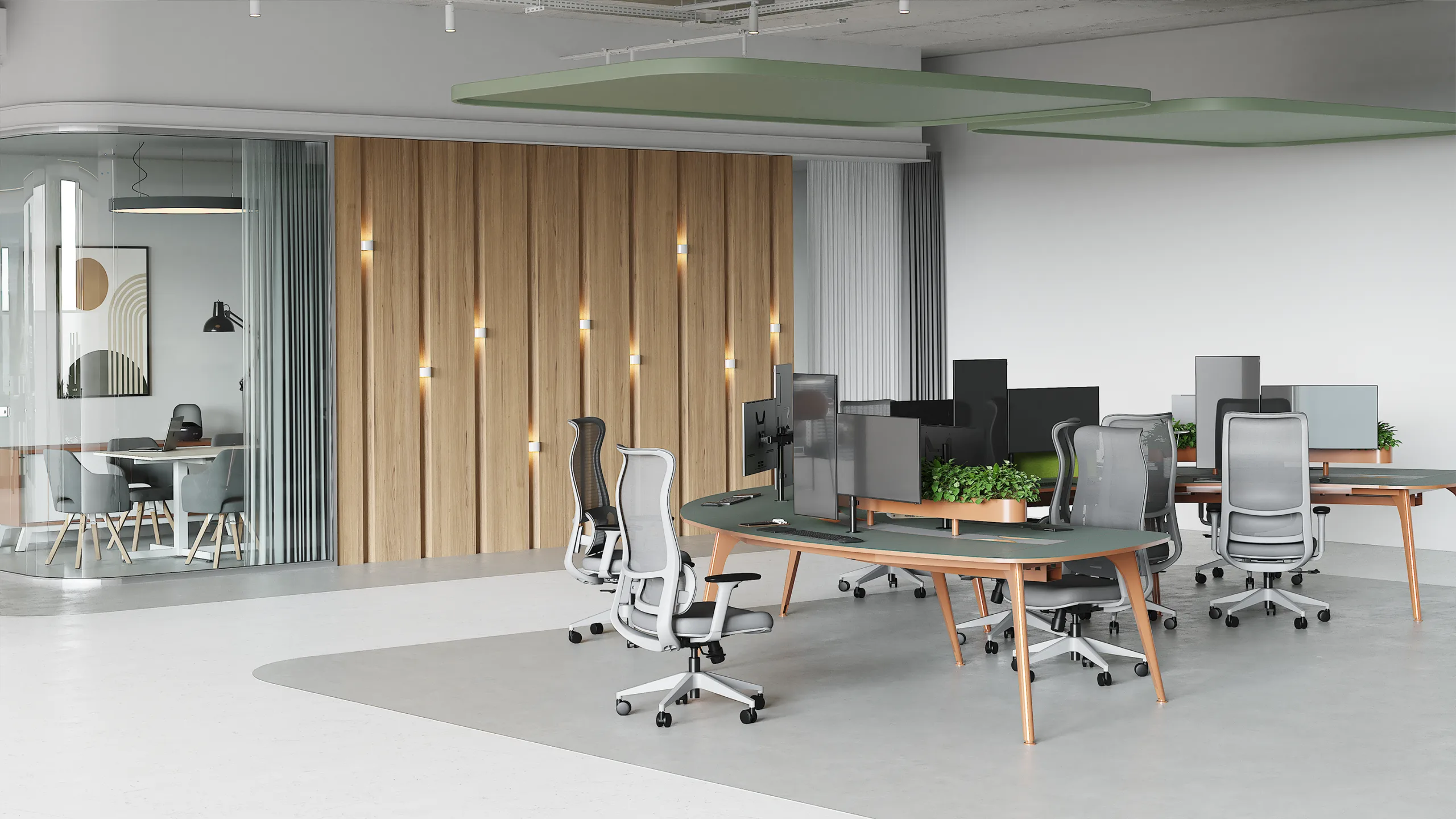
How to integrate industrial style without sacrificing functionality
Aesthetics should not come at the expense of performance. A well-specified industrial desk meets the same criteria as any other corporate furniture.
Ergonomics first
Proper height, sufficient depth for the monitor, and free space for the legs remain essential. An attractive design with incorrect proportions causes daily discomfort. If you want to go deeper, check out our article on ergonomic desks and their features.
Cable management
Industrial aesthetics allow for visible elements, but messy cabling is not part of the style. Cable trays, grommets, and profiles that organize the cables keep the look clean and professional.
Acoustic control
Industrial spaces tend to have hard surfaces that reflect sound. It's advisable to compensate with panels and partitions with sound-absorbing properties. Discover our acoustic solutions for offices.
Consistent seating
The desk is only one part of the whole. A chair with matching aesthetics and ergonomics completes the workstation. Discover our office chairs.
Integrated storage
Drawer units and cabinets in the same line of materials maintain order and visual consistency. Explore our storage solutions.
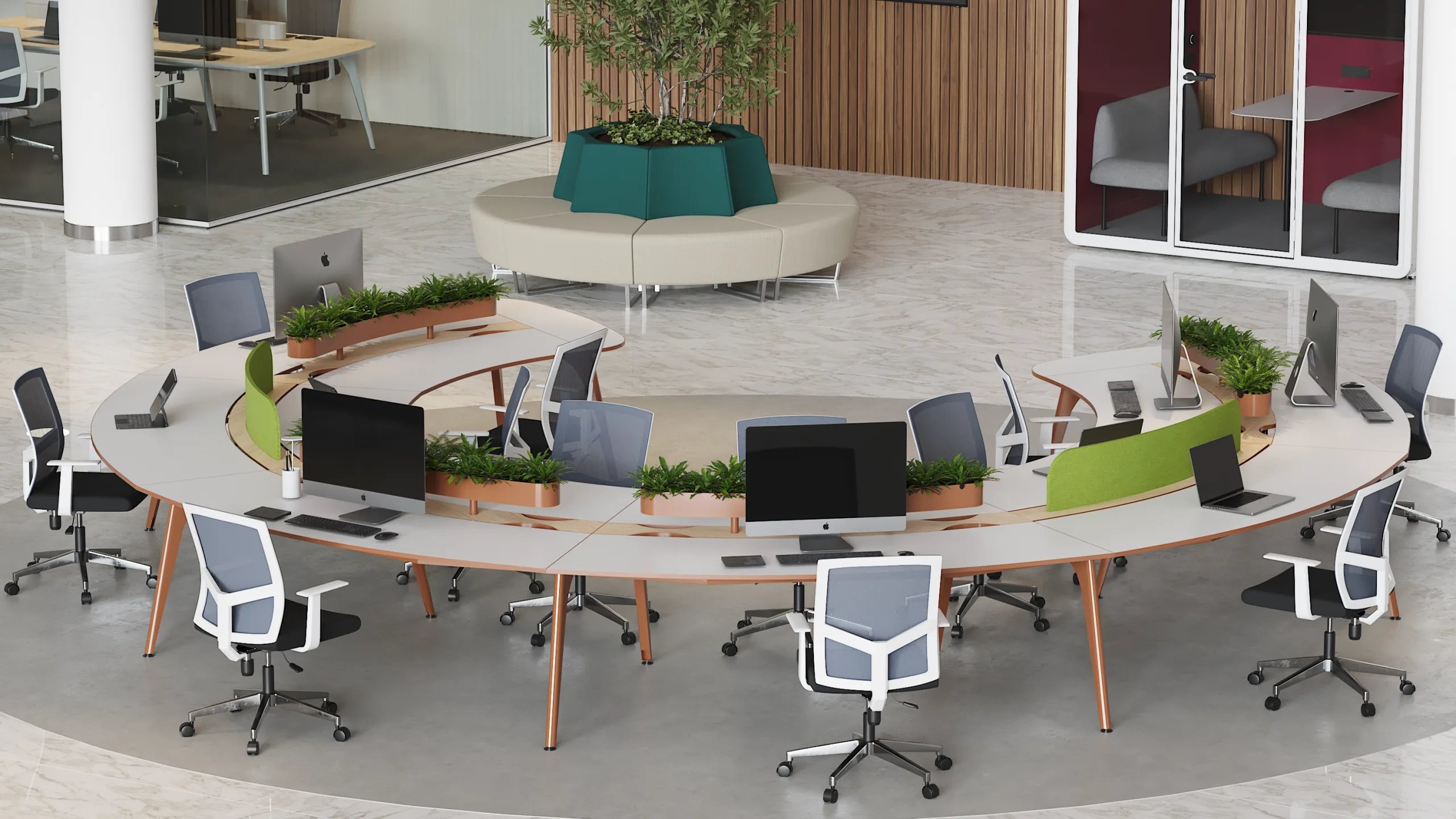
How to combine industrial desks with the rest of the space
- Balance cold with warm. Metal and concrete work better alongside wood, textiles, and greenery.
- Pay attention to lighting. Warm, well-distributed light softens the hardness of the materials.
- Don't overcrowd with elements. Industrial style works because of its restraint; fewer pieces, better chosen.
- Maintain consistency between areas. Reception, workstations, meeting rooms, and executive areas should speak the same language.
- Incorporate color with intention. A targeted accent in seating or accessories brings life without breaking the aesthetic.
What types of companies is this style ideal for?
- Tech companies and startups, which seek dynamic and modern environments.
- Creative and marketing agencies, where the visual identity of the space is part of the brand.
- Coworking spaces, which benefit from the distinctive character and durability of the furniture.
- Corporations in transformation, which renovate offices to reflect a more open culture.
- Companies with exposed architecture, which want furniture in tune with the space.
Common mistakes when choosing industrial desks
- Choosing based on aesthetics alone. A good look doesn't make up for poor ergonomics.
- Overusing dark, cold materials. Without warmth, the space can feel harsh and unwelcoming.
- Neglecting acoustics. Untreated hard surfaces generate noise and fatigue.
- Not coordinating with the rest of the furniture. An industrial desk isolated in an office of a different style looks out of place.
- Ignoring manufacturing quality. Thin or poorly welded metal frames compromise stability and durability.
- Following the trend without considering brand identity. The style should reinforce the company, not impose itself on it.
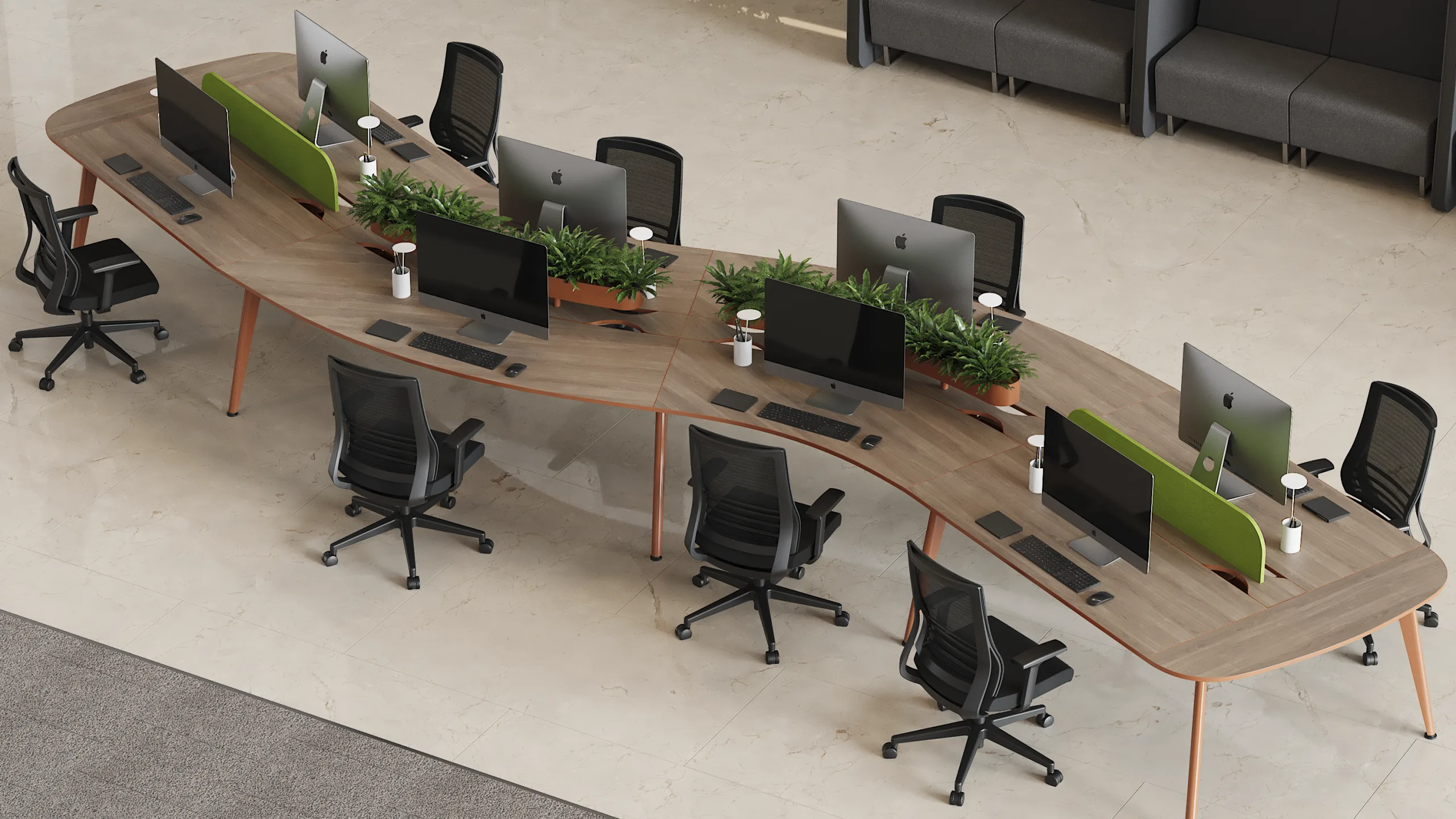
How Línea Italia can help you design your office
At Línea Italia, we design, manufacture, and install corporate furniture that combines contemporary aesthetics, ergonomics, and functionality. Our team supports the entire project: from understanding how your team works and analyzing the space, through 3D visualization, manufacturing, installation, and delivery.
Learn about our process in space design, explore our corporate furniture collections, and see real examples in our projects section.
Conclusion
Industrial desks are more than a fad: they respond to companies' desire for spaces with identity, honest materials, and an aesthetic aligned with their culture. When well specified, they balance visual character with ergonomics, acoustics, and order, and they fit into all kinds of work areas. The key lies in choosing with discernment, paying attention to manufacturing quality, and thinking of the furniture as part of a comprehensive project.
Want to give your office character with industrial-style furniture? Request a proposal from our team of specialists and discover the ideal configuration for your space.