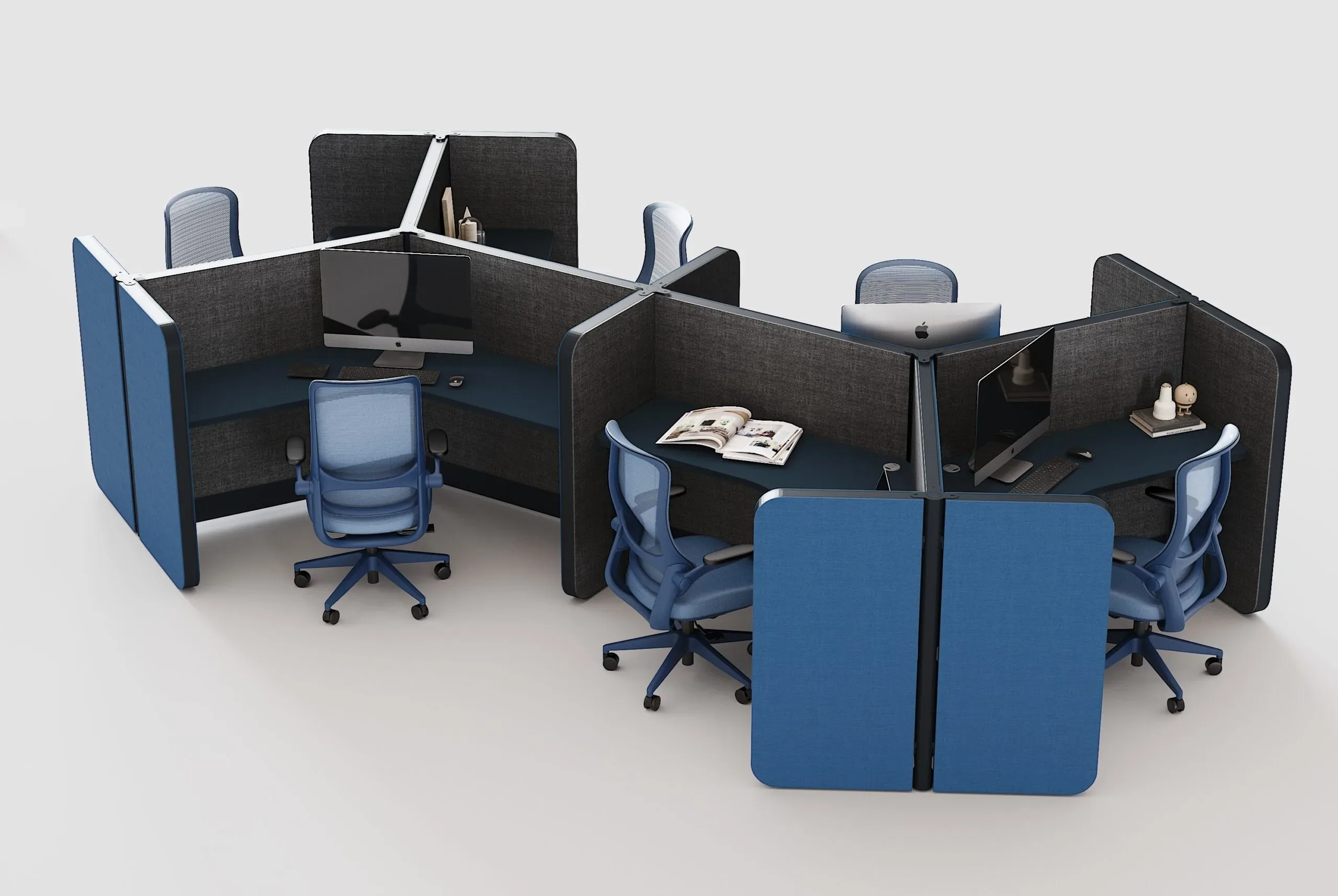
Offices are no longer static spaces. Teams grow, merge, work in hybrid models, and switch projects with a frequency that would have seemed unthinkable a few years ago. In this context, drywall partitions and fixed dividers become a limitation: they are costly to modify, generate dust and construction work, and force operations to stop every time the space needs to be redistributed.
Mobile partitions solve that problem. They allow you to divide, open, reorganize, and adapt work areas in a matter of minutes, with no construction work and no permanent installation. In this article we explain what they are, what advantages they offer, what types exist, which spaces they work best in, and what criteria to consider when choosing them correctly.
What are mobile partitions?
Mobile partitions are freestanding divider panels, generally mounted on wheels or stable bases, that can be moved, folded, or relocated without specialized tools or modifications to the building's structure. Unlike fixed partitions, they are not anchored to the floor, walls, or ceiling, so they can be set up immediately and are completely reversible.
They can be made from materials such as acoustic upholstery, glass, acrylic, laminates, or combinations of these, and they are used both to separate zones and to provide visual privacy, partially control noise, or simply organize the flow of people within a space.
Advantages of mobile partitions
1. Total flexibility in the face of change
Reorganizing an entire area can be done in hours, not weeks. This lets you respond quickly to a growing team, a restructuring, or a change in the way people work.
2. No construction and minimal disruption
There is no demolition, dust, or construction noise. Office operations continue as normal, which is especially valuable in spaces that cannot stop.
3. A reusable investment
When the company moves or remodels, mobile partitions go with it. A fixed partition, on the other hand, stays behind with the property.
4. Lower fit-out cost
By avoiding construction materials, specialized labor, and construction time, the total cost of dividing a space is usually considerably lower, especially in rented offices where permanent modifications are not always allowed.
5. Adaptation to temporary uses
Training rooms, internal events, temporary project areas, or contingency zones can be set up and removed when they are no longer needed.
6. Contribution to privacy and acoustics
With the right materials, mobile partitions reduce visual distractions and partially dampen noise between zones, improving concentration without completely closing off the space.
Types of mobile partitions
Panels on wheels
These are the most versatile. They move easily, have brakes to lock them in position, and can be combined to form longer dividers. Ideal for open areas and multipurpose rooms.
Folding or screen-type partitions
They unfold to delimit an area and fold up to take very little space when stored. They work well in service areas, consultation rooms, reception areas, or rest corners.
Acoustic upholstered partitions
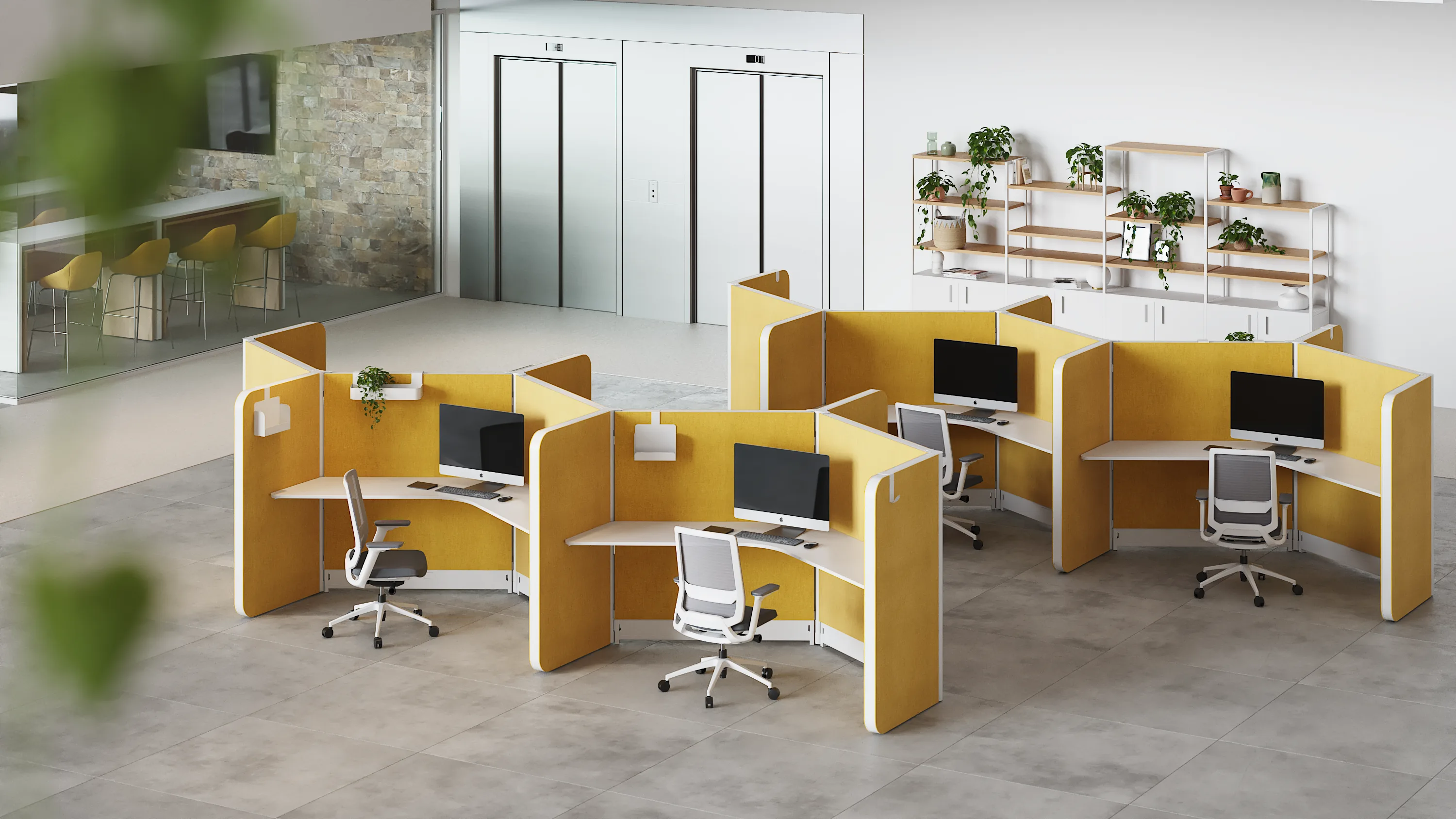
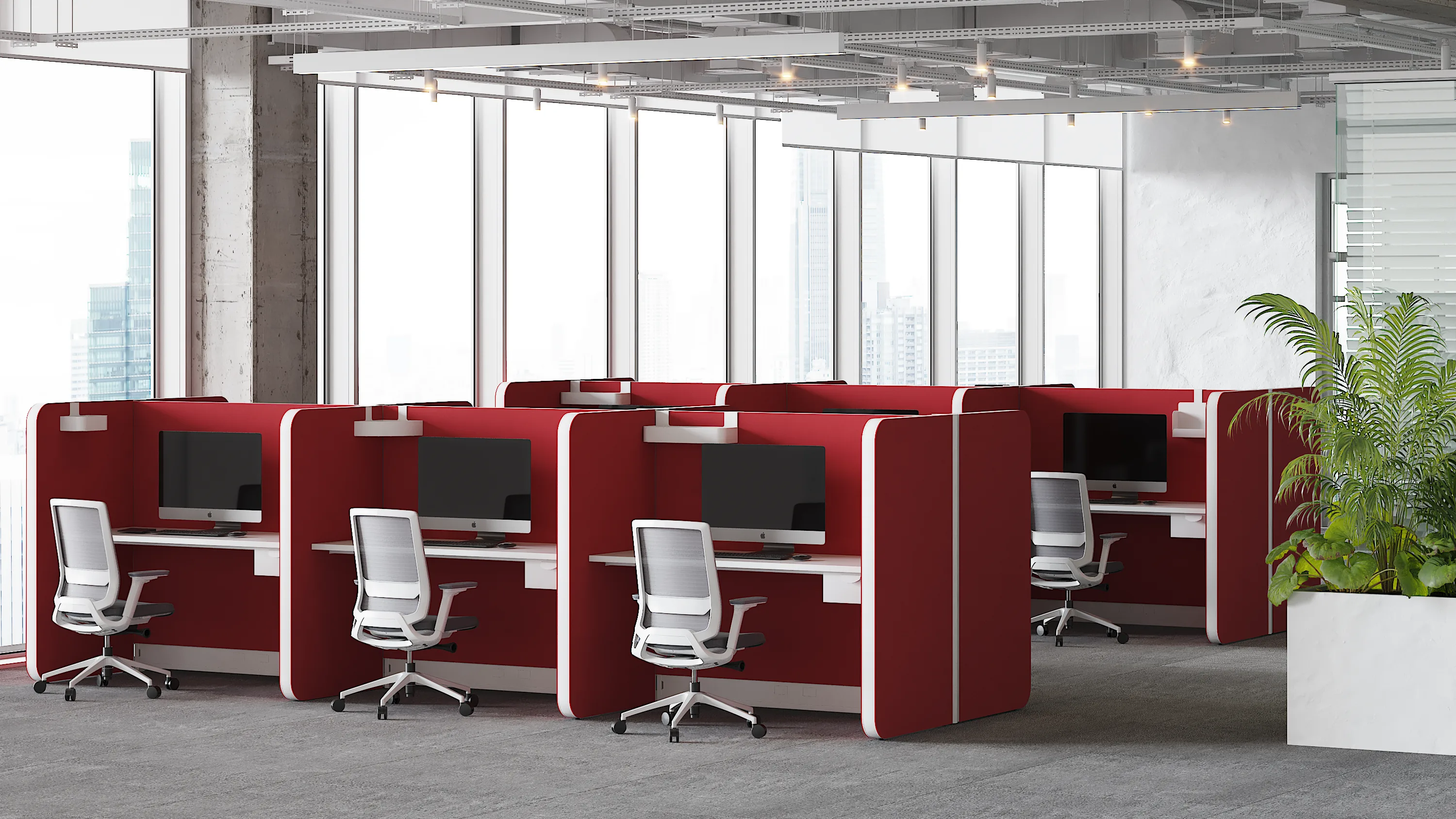
They combine mobility with sound absorption. They are a practical solution for separating workstations, call areas, or concentration zones. Learn more about our acoustic solutions for offices.
Mobile glass or acrylic partitions
They provide separation without blocking light. They are useful in improvised meeting rooms, service counters, or areas where transparency and ease of cleaning are desired.
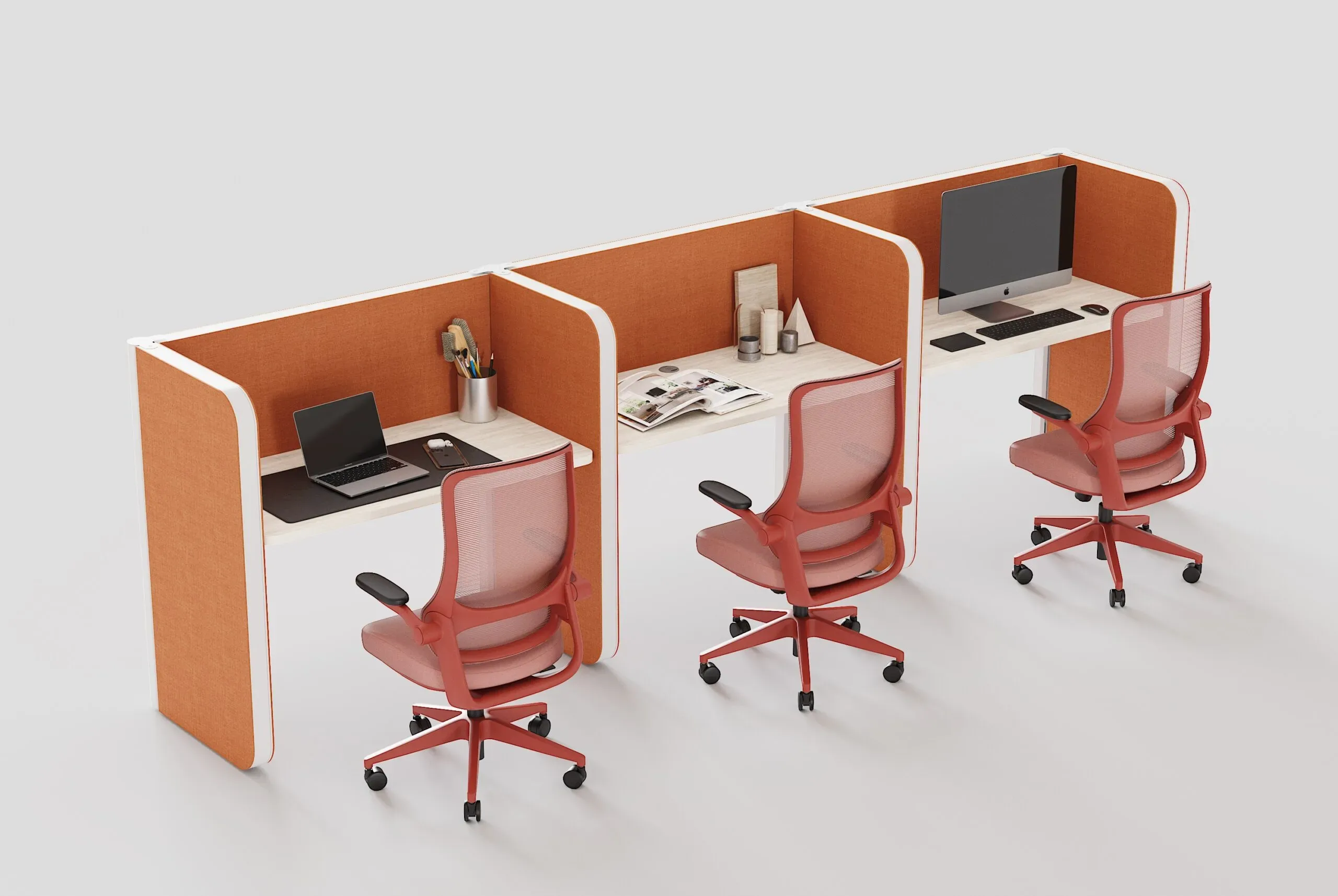
Desktop panels
Smaller in size, they are placed on the work surface to provide individual privacy and reduce distractions, without the need to modify the layout of the area.
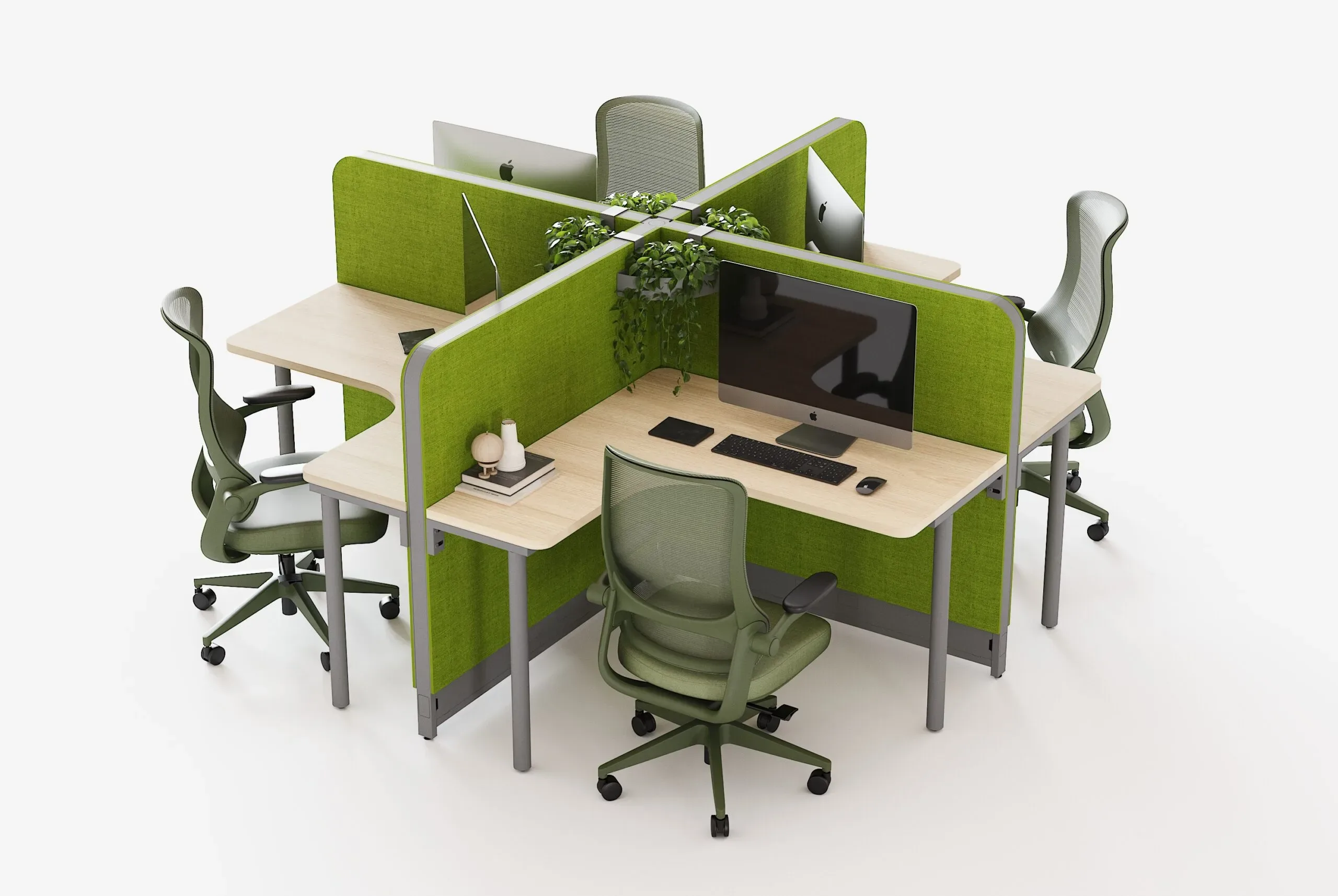
Connectable modular dividers
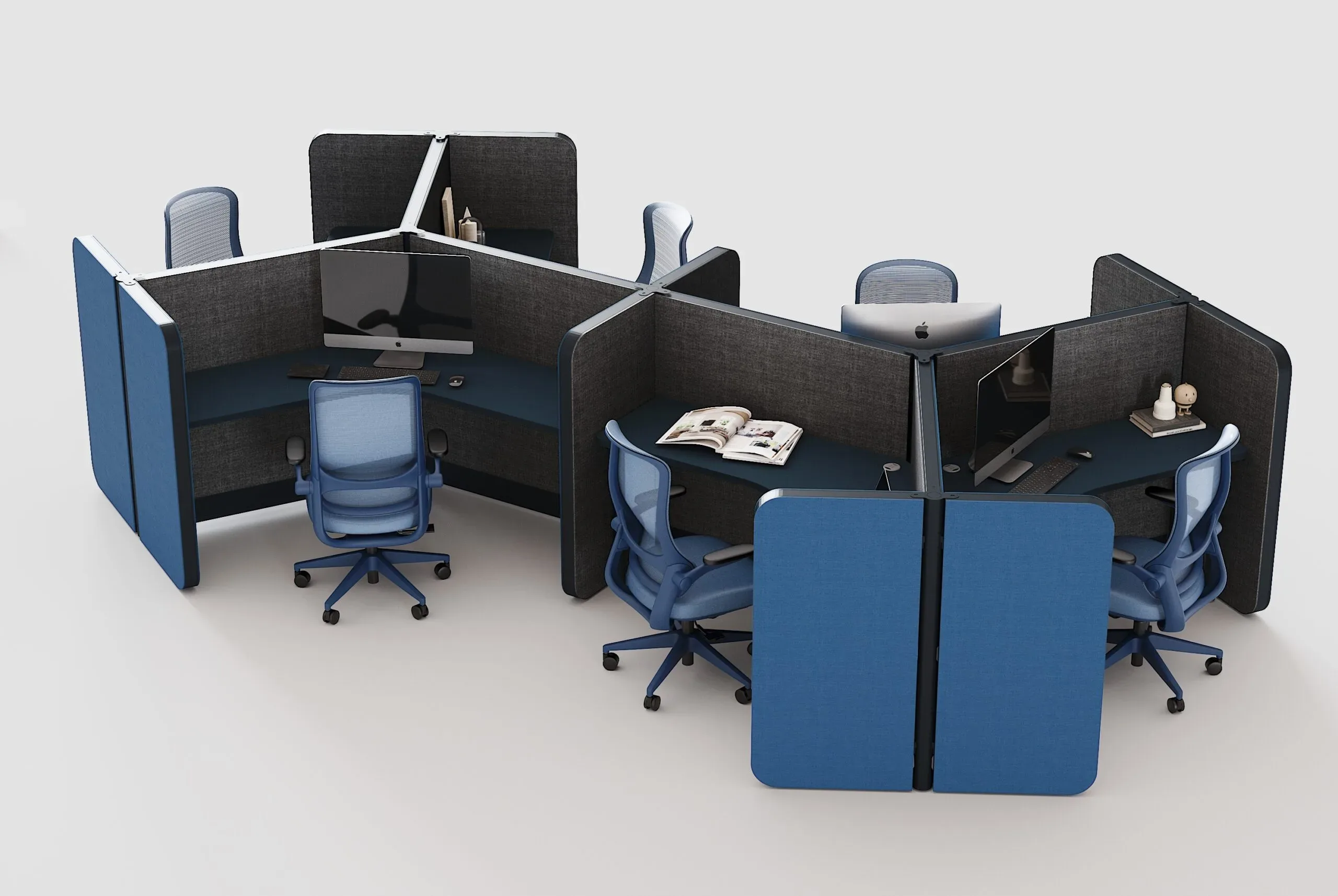
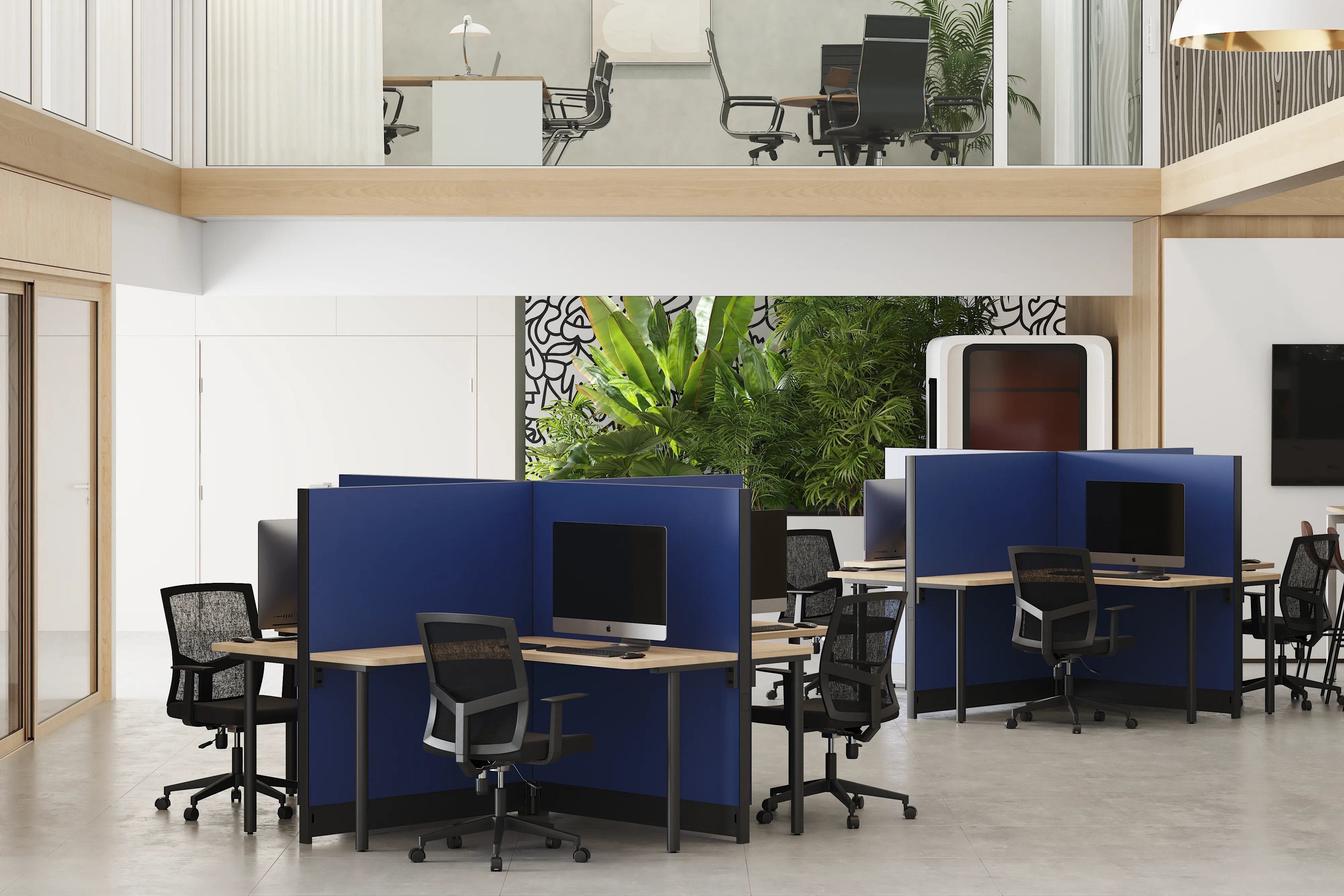
Panel systems that join together through connectors, allowing you to create linear, L-shaped, U-shaped, or island configurations and modify them whenever necessary.
Explore the material and color options in our finishes section.
Which spaces do they work best in?
- Coworking spaces and flexible offices: they allow you to adapt zones according to occupancy and users. If this case interests you, read our article on partitions for separating work areas in coworking spaces.
- Call centers and operational areas: they help organize teams and reduce distractions between stations. Discover our workstations.
- Training rooms and events: they open up to create a large hall and close to form independent areas.
- Reception and service areas: they allow you to hide support zones or give privacy to certain conversations.
- Rented offices: an alternative for dividing space without modifying the property or leaving permanent improvements behind.
- Hybrid spaces: where occupancy varies by day and the layout must be adjusted frequently.
Mobile partitions vs. fixed partitions
| Aspect | Mobile partitions | Fixed partitions |
|---|---|---|
| Installation | Immediate, no construction | Requires installation and anchoring |
| Relocation | Simple and fast | Complex and costly |
| Acoustic insulation | Partial | Higher, depending on the system |
| Total privacy | Limited | High |
| Reuse | Full | Limited |
| Ideal for | Changing spaces | Permanent areas with high confidentiality |
The decision is not either/or: many offices combine fixed partitions in executive or highly confidential areas with mobile solutions in operational and collaborative zones. For the first case, read our article on elegant partitions for executive offices.
Criteria for choosing mobile partitions
Height and proportion
A low partition offers subtle separation and preserves the sense of spaciousness; a tall one provides greater privacy but can isolate and block light. The height should respond to the function of each zone.
Stability and braking system
It is essential that the wheels have reliable brakes and that the base ensures stability, avoiding accidental movement or the risk of tipping over.
Weight and ease of movement
They should be movable by a single person without excessive effort, yet without feeling flimsy.
Material and acoustic performance
If the goal is to reduce noise, choose upholstered or sound-absorbing panels; if you are looking for light and transparency, glass or acrylic will be better options.
Ease of cleaning and maintenance
In shared or high-traffic spaces, materials must withstand frequent use and be easy to clean.
Visual integration
Colors, textures, and proportions should be in dialogue with the rest of the furniture so that the partitions are perceived as part of the project and not as an improvised add-on.
Safety and evacuation
Any layout must respect evacuation routes, emergency exits, and applicable civil protection regulations. Mobile partitions must not obstruct access points or signage.
How to plan a flexible layout
- Define usage scenarios. Identify how the space changes during the week, the month, or the year.
- Zone before dividing. Determine which areas require concentration, collaboration, or customer service.
- Leave room to maneuver. Consider aisles and storage areas for when the partitions are not in use.
- Plan for storage. If the partitions will be folded or removed frequently, define where they will be kept. Check out our storage solutions.
- Coordinate with electrical and data. Prevent cables from crossing the movement zone of the partitions.
- Maintain visual consistency. Use the same family of materials and colors throughout the floor.
Common mistakes when choosing mobile partitions
- Expecting total acoustic insulation. They are a partial solution; for high confidentiality, it is best to combine them with other systems.
- Choosing unstable models. Lightweight bases or wheels without brakes pose a risk and create distrust.
- Ignoring evacuation routes. Flexibility must not compromise safety.
- Buying on price without checking materials. Thin upholstery or flimsy structures deteriorate quickly.
- Not planning where to store them. Without a defined space, they end up getting in the way in hallways.
- Neglecting aesthetics. A mismatched set projects improvisation.
- Not considering future growth. A modular, expandable system avoids premature replacements.
How Línea Italia can help you
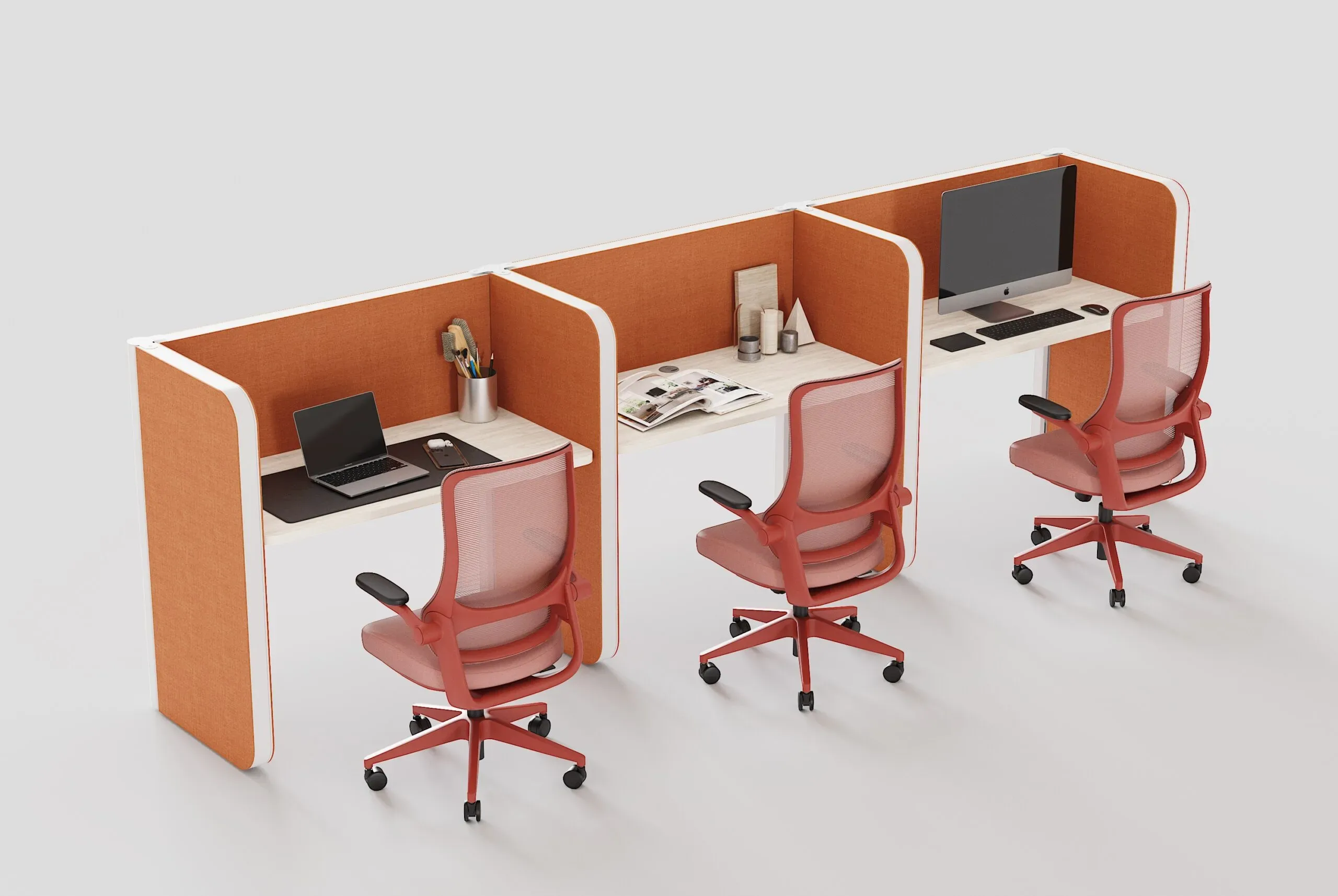
At Línea Italia we design, manufacture, and install furniture and dividers for corporate offices, with a comprehensive vision of the space. Our team analyzes how your organization works, proposes flexible configurations, and coordinates partitions, workstations, storage, and finishes within a single, cohesive solution.
Learn about our process in space design, explore our corporate furniture collections, and see real examples in our projects section.
Conclusion
Mobile partitions offer something few solutions manage to achieve: transforming a space without construction, without interruptions, and without compromising your investment. They are ideal for offices that change, teams that grow, and areas that require versatility. Choosing them well means defining the level of privacy and acoustics needed, paying attention to stability and materials, respecting the safety of the space, and coordinating their design with the rest of the furniture.
Do you need to divide or reorganize your office without construction work? Request a proposal from our team of specialists and discover the ideal mobile partition solution for your space.