Today's offices face a constant challenge: fostering collaboration between teams without sacrificing individual focus. Fully open spaces, so popular a few years ago, proved to come at a high productivity cost due to noise, visual distractions, and a lack of acoustic privacy. On the other hand, traditional closed cubicles isolate too much and make spontaneous communication between employees difficult.
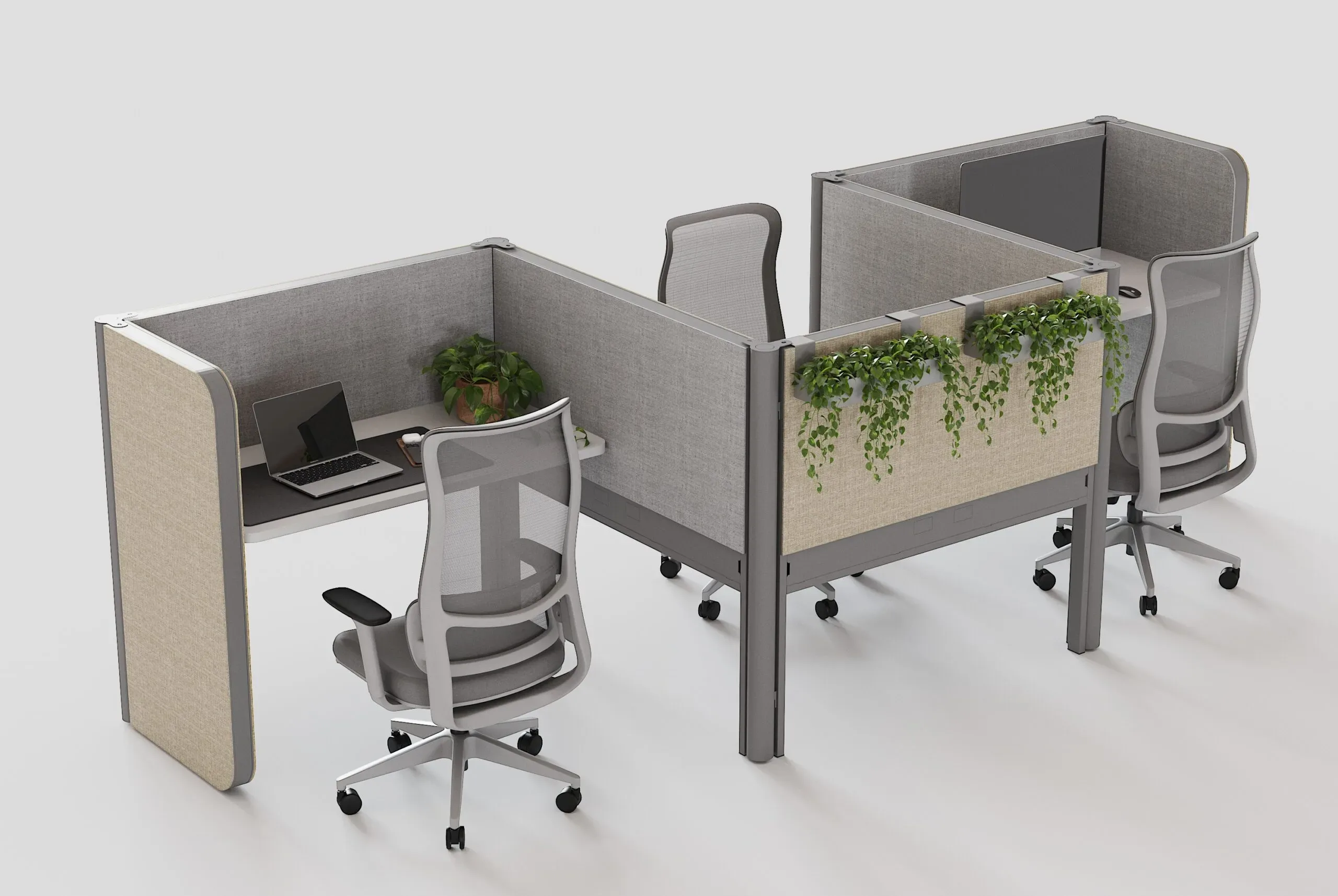
Semi-private partitions for collaborative workstations emerged as a direct response to this dilemma. These are medium-height dividers that define work spaces without fully enclosing them, achieving a functional balance between privacy, visual order, and team dynamics. In this article, we explain what they are, what real benefits they provide, how to choose the right ones for your office, and what mistakes to avoid when implementing them.
What Are Semi-Private Partitions and How Do They Differ from Other Dividers?
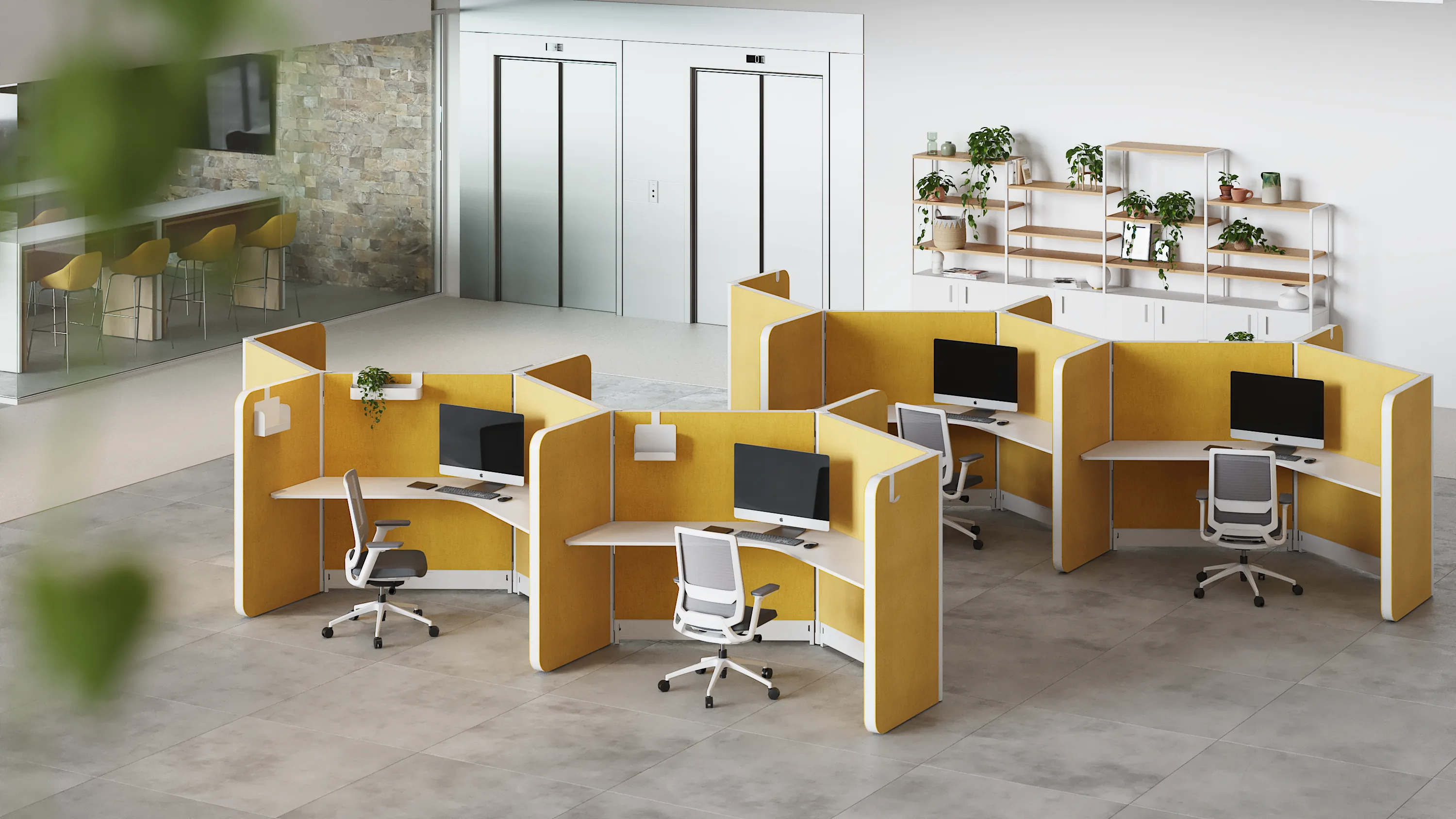
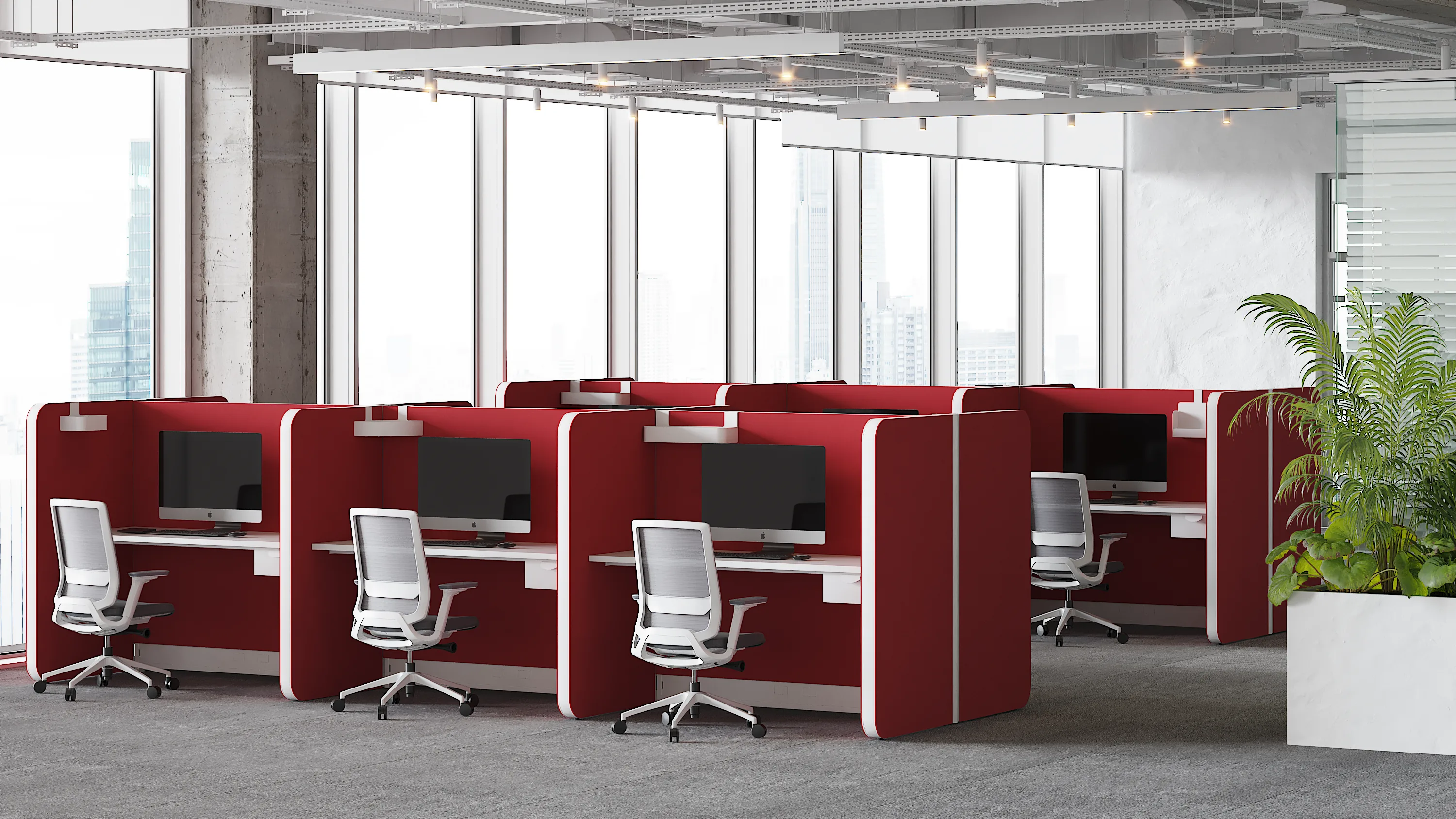
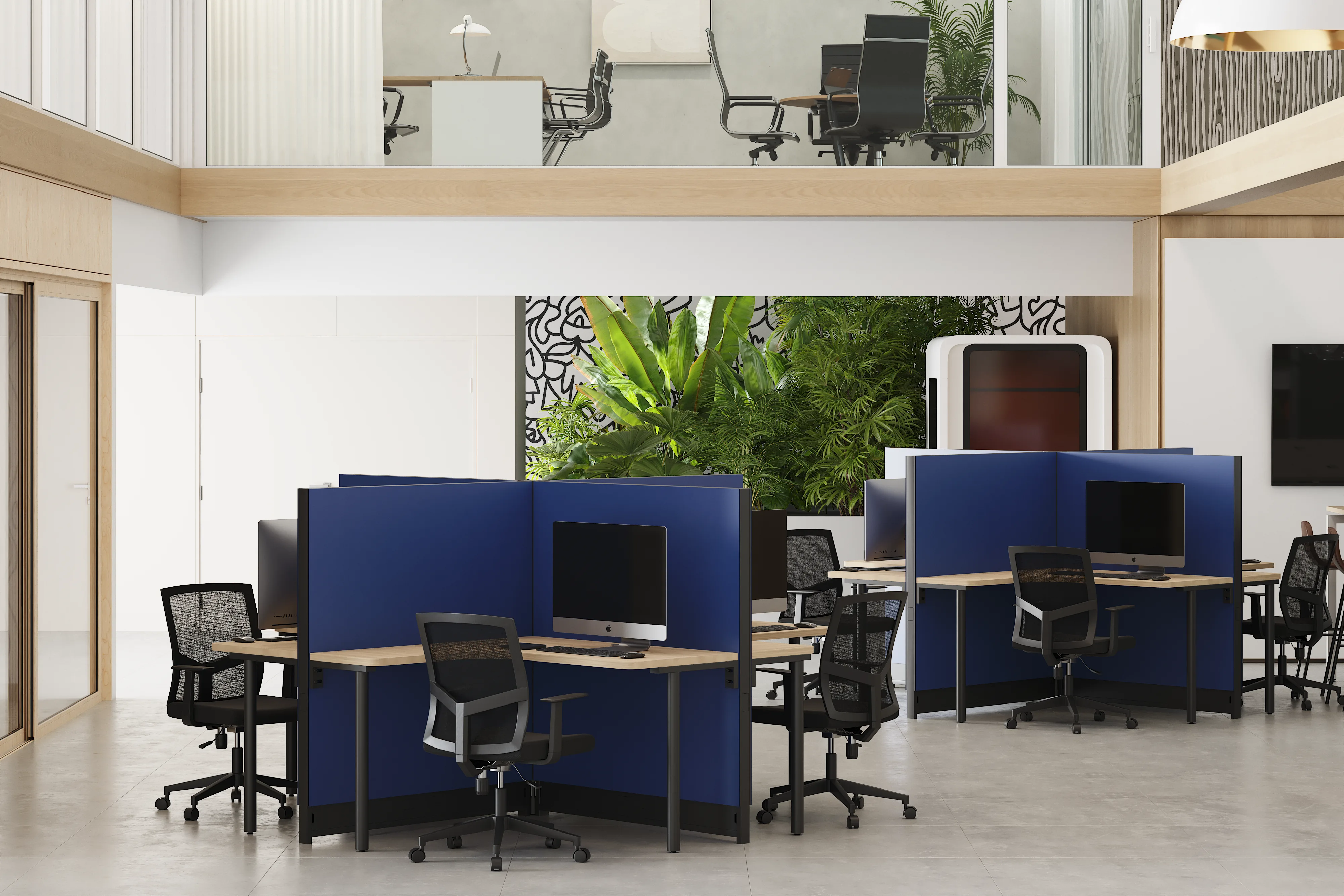
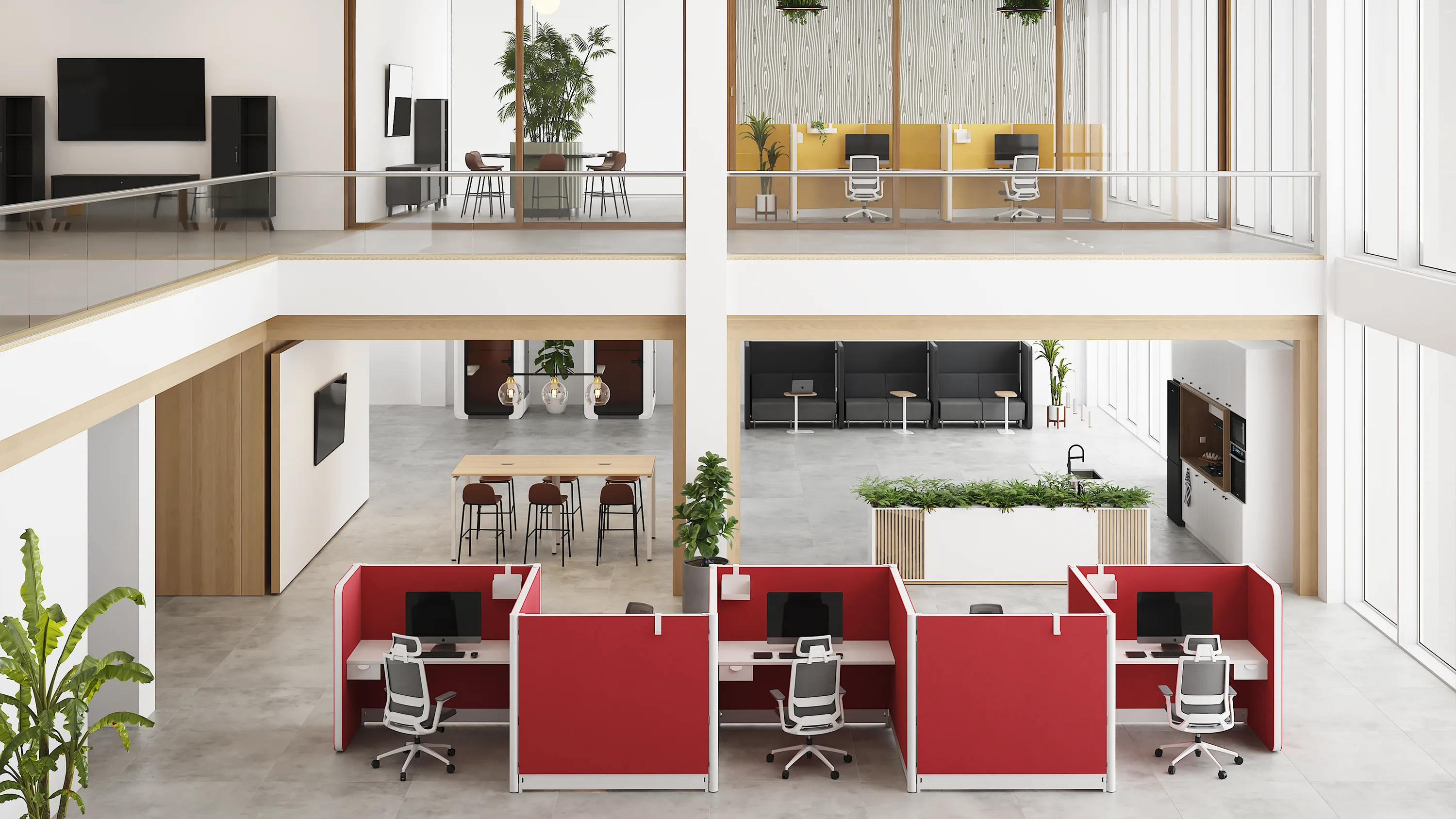
Unlike the tall panels used in closed cubicles, semi-private partitions typically measure between 100 and 140 cm in height. This measurement is key: it's enough to block direct eye contact between seated people, but not so tall as to completely isolate the space or block natural light.
There are different types depending on the material and purpose:
- Acoustic partitions: made with sound-absorbing materials, ideal for reducing ambient noise in open offices.
- Partitions with translucent panels or frosted glass: allow natural light through while creating partial visual separation.
- Modular partitions with connectors: integrate directly into the desk system, allowing flexible configurations as the team grows.
- Mobile partitions with base and wheels: useful for spaces that change configuration frequently, such as coworking rooms or multifunctional areas.
If you want to see the models available for your type of office, you can check out the full catalog.
Real Benefits of Using Partitions in Collaborative Workstations
1. Reduced Noise and Visual Distractions
One of the biggest enemies of productivity in open offices is the constant noise of conversations, calls, and notifications. Partitions, especially those made of acoustic material, absorb part of that sound and reduce visual distractions from the constant movement around.
2. A Sense of Privacy Without Total Isolation
Unlike a closed cubicle, a semi-private partition allows the employee to feel "in their own space" without losing visual and communicative connection with the rest of the team. This is key in collaborative work cultures where smooth communication remains a priority.
3. Better Organization of the Physical Space
Partitions help clearly define workstations, preventing one person's furniture, cables, or documents from visually encroaching on another's space. This improves the overall perception of order in the office.
4. Flexibility for Future Configurations
Many modular partition systems allow you to reconfigure the desk layout without the need for construction work or structural changes, which is ideal for growing companies or those with changing space needs.
5. Improved Perceived Well-Being of the Team
Having a space of one's own, even if semi-open, reduces the feeling of constant exposure created by fully open spaces, which positively impacts employee well-being and concentration.
How to Choose the Right Partition for Your Office?
- Height based on your goal
- Material based on your needs
- Compatibility with existing furniture
Before choosing, check whether your current desks have a connection system for modular partitions, or whether you'll need standalone models with their own base. This can make a significant difference in the total cost of the project.
If you need guidance choosing a partition system compatible with your current furniture, you can check out our modular partitions.
Common Configurations in Collaborative Workstations
Semi-private partitions adapt to different workstation formats; among the most commonly used are:
The choice of configuration depends directly on the team's work dynamic: the more constant collaboration required, the more it pays to prioritize low partitions and open visual access at the ends.
Conclusion: Privacy and Collaboration Can Coexist in the Same Space
Semi-private partitions for collaborative workstations are not just a decorative element — they are a functional solution to one of the biggest challenges in modern office design: balancing individual focus with teamwork. Choosing the right height, material, and configuration can make a real difference in your team's productivity and well-being.
If you're ready to design more functional collaborative workstations for your office, you can visit Línea Italia.